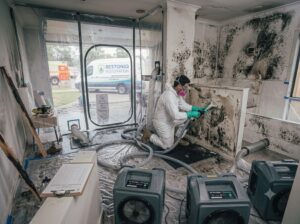
Brisbane’s storm season usually runs from October to March, and severe thunderstorms can bring destructive winds, giant hail and flash flooding with very little warning. Storm damage often lets water into roofs, ceilings and walls, and that water keeps causing damage long after the storm has passed.
Use this checklist to stay safe, limit the damage and get your home back to normal as quickly as possible.
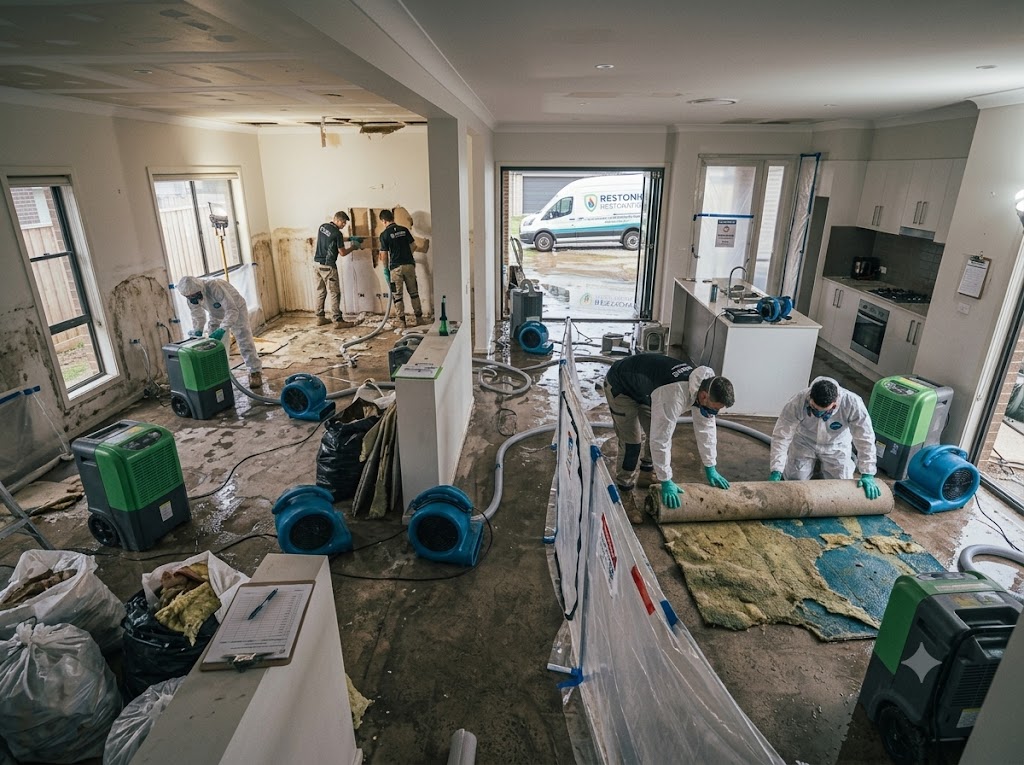
Table of Contents
1. Put Safety First
Stay indoors until the storm has passed. Keep away from fallen powerlines and treat every line as live. Report them to Energex on 13 19 62. If you need help with emergency repairs such as a damaged roof, the Queensland SES can be contacted on 132 500. For life-threatening emergencies, call 000.
2. Switch Off Power to Wet Areas
If water is coming through ceilings or light fittings, switch off those circuits at the switchboard if it is dry and safe to reach. Do not touch switches or appliances while standing in water.
3. Stop More Water Getting In
Place buckets under drips and move furniture away from leaks. If you can do it safely from inside, push towels against door thresholds. Leave roof work to professionals or the SES. Never climb a wet roof during or straight after a storm.

4. Check Ceilings for Sagging
Pooled water above plasterboard is heavy. If a ceiling is bulging, clear the room and keep everyone out. Our guide to ceiling water damage explains the warning signs.
5. Photograph All Storm Damage
Take photos and video of the roof from the ground, fallen trees, damaged gutters, every wet room, stained ceilings and damaged contents. Record the date and time. Good evidence makes storm damage insurance claims faster and easier.
Water damage happening right now? Restoniq’s 24/7 emergency team covers Brisbane, Logan, Ipswich, Moreton Bay, Redlands and the Gold Coast. Call 042 022 3980 or request an urgent callback.
6. Contact Your Insurer Early
Most home and contents policies cover storm damage, though flood cover depends on your policy. Lodge your claim as soon as possible and ask about emergency make-safe work. Keep receipts for tarps, emergency repairs and accommodation. See our guide to water damage insurance claims in Queensland.
7. Remove Standing Water
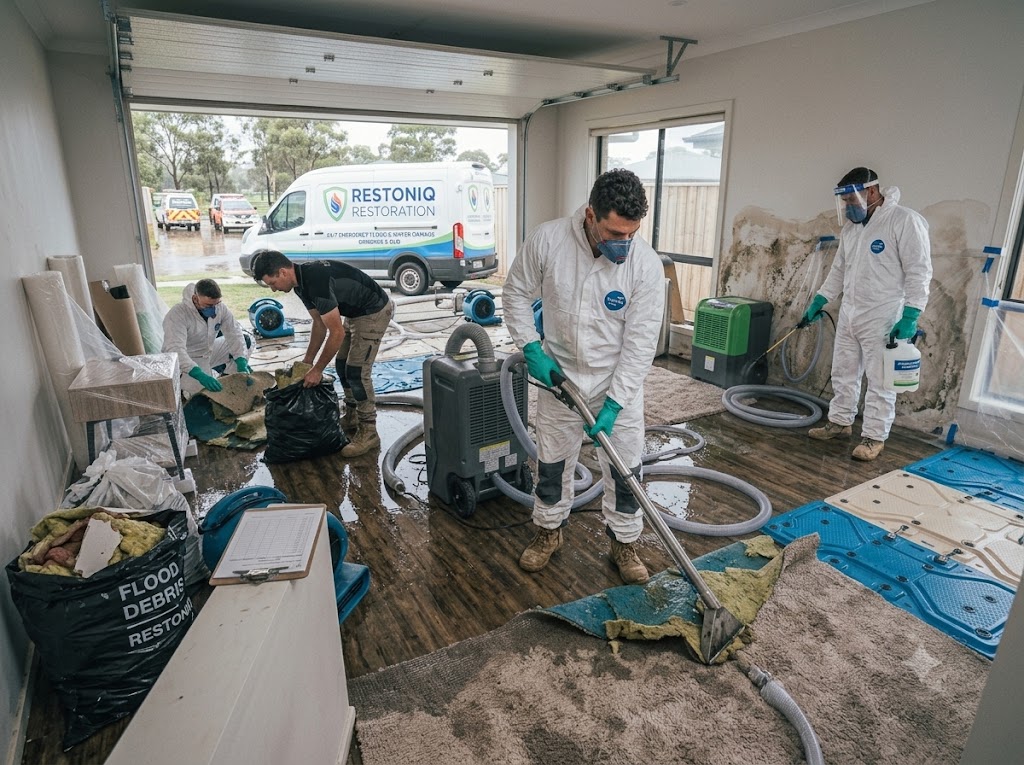
Storm water that has entered through the roof or under doors needs to come out quickly. Professional water extraction removes far more moisture from carpets and underlay than towels or a wet vac, which cuts drying time.
8. Start Drying Within 48 Hours
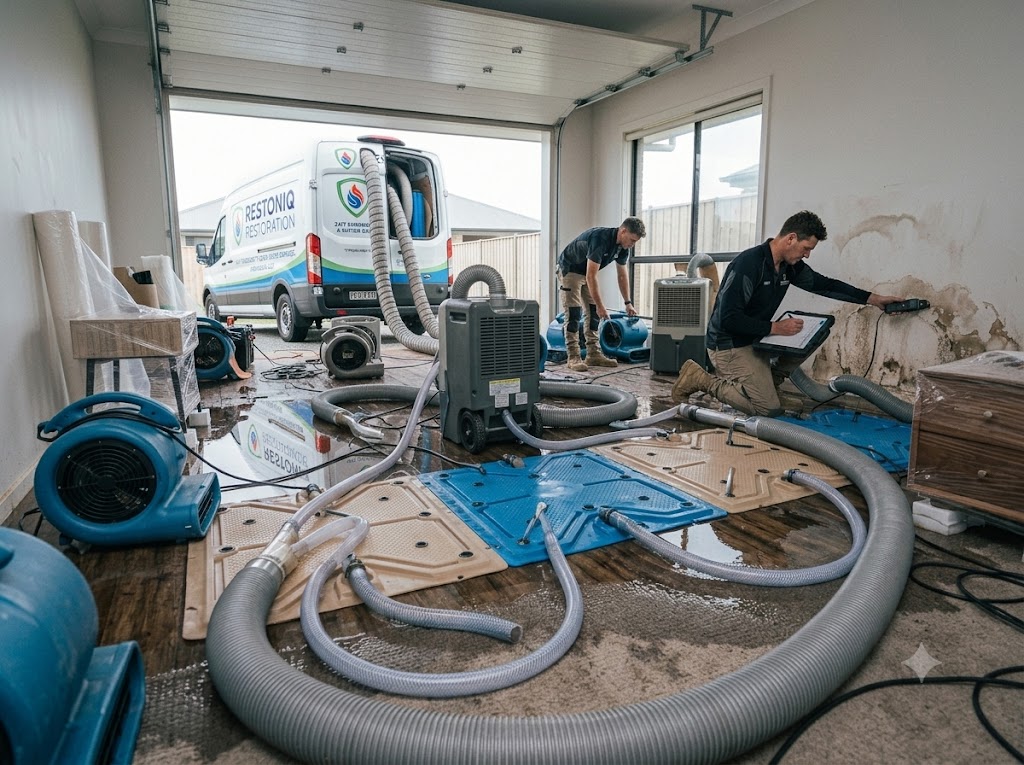
After storm damage, moisture hides in wall cavities, insulation and subfloors. Commercial dehumidifiers and air movers, monitored with moisture meters, dry the structure properly. Learn about our structural drying process.
9. Watch for Floodwater Contamination
If surface water or creek water entered your home, treat it as contaminated. It can carry sewage, chemicals and bacteria. Porous items like carpet and underlay usually need removal, and hard surfaces need sanitising. Our flood clean-up team handles this safely.
10. Prevent Mould After Storm Damage
Brisbane’s warm, humid weather after a storm is perfect for mould. Keep checking for musty smells and spotting in the weeks after storm damage. Read more about mould after a flood and book mould and bacteria control if you see signs.
How to Prepare Before the Next Storm
- Clean gutters and downpipes before October
- Trim overhanging branches
- Check roof tiles and flashing
- Secure outdoor furniture and trampolines
- Keep an emergency kit with a torch, batteries and copies of your insurance policy
- Follow Bureau of Meteorology warnings
Our Brisbane wet season checklist covers preparation in more detail.
Frequently Asked Questions
Does home insurance cover storm damage in Queensland?
Most home insurance policies cover storm damage, including rain entering through a storm-damaged roof. Flood cover is separate in many policies, so check your PDS.
Who do I call for storm damage in Brisbane?
Call 000 for life-threatening emergencies, the SES on 132 500 for emergency roof help, Energex on 13 19 62 for fallen powerlines, and a restoration company for water extraction and drying.
How soon should storm water be dried?
Drying should start within 24 to 48 hours to prevent mould and swelling, especially in Brisbane’s humid climate.
Is water from storm damage contaminated?
Rain coming through a roof is usually clean at first. Surface flooding and creek water are treated as contaminated because they can carry sewage and chemicals.
Get 24/7 Emergency Help From Restoniq
Storm damage can leave a home soaked in hours. Restoniq responds 24/7 to storm damage across Brisbane, Logan, Ipswich, Moreton Bay, Redlands and the Gold Coast with extraction, drying and mould prevention. If you are on the coast, read our Gold Coast storm damage guide, or learn about our water damage restoration Brisbane service.
Need an emergency restoration team? Restoniq’s 24/7 emergency team covers Brisbane, Logan, Ipswich, Moreton Bay, Redlands and the Gold Coast. Call 042 022 3980 or request an urgent callback.