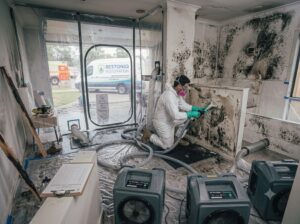
The Gold Coast sees intense summer thunderstorms, east coast lows and occasional ex-tropical cyclones. Gold Coast storm damage often combines destructive winds, heavy rain and localised flooding, especially around canals, low-lying suburbs and older homes with flat roofs.
Here are nine proven steps for recovering quickly from Gold Coast storm damage. Acting fast after Gold Coast storm damage protects your home, your belongings and your insurance claim.
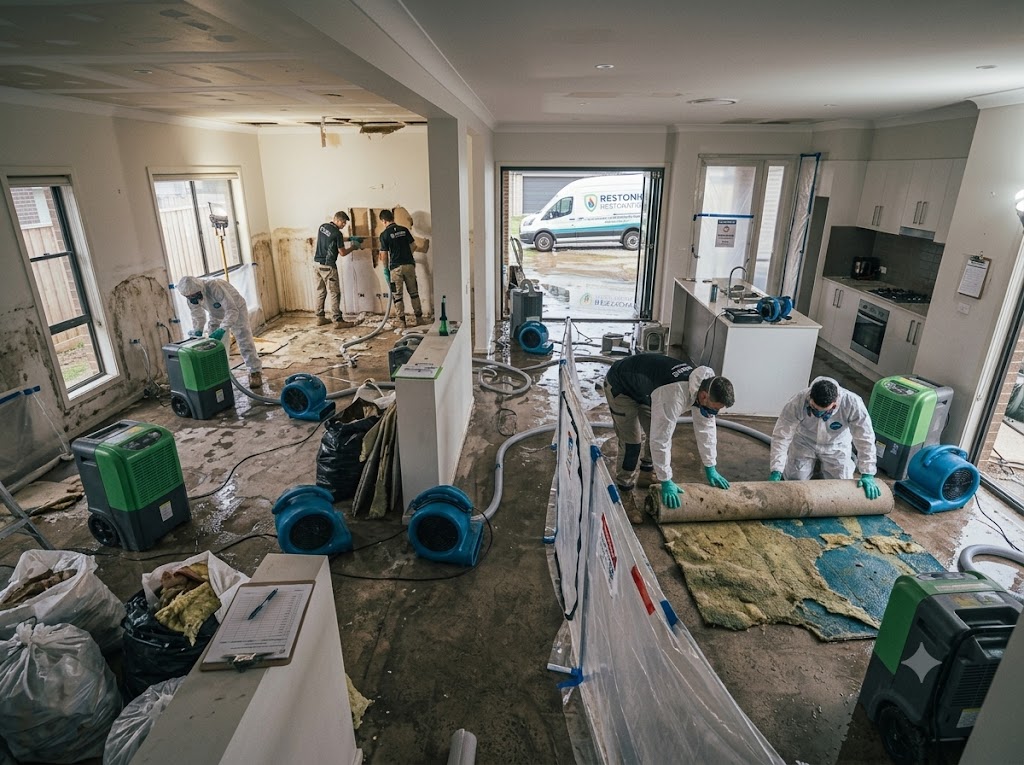
Table of Contents
1. Stay Safe First
Wait until the storm has passed. Avoid fallen powerlines and report them to Energex on 13 19 62. For emergency roof help, call the SES on 132 500. Call 000 if life is at risk.
2. Check Ceilings, Roof Lines and Windows
Look for sagging ceilings, water around light fittings and leaks around windows and sliding doors. Coastal homes often take wind-driven rain through window seals. See ceiling water damage warning signs.
3. Switch Off Power to Wet Areas
If water reaches power points or lights, turn off the circuit at a dry switchboard. Do not touch electrical items while standing in water.

4. Photograph All Gold Coast Storm Damage
Capture the outside of the property, the roof from the ground, fallen trees, every wet room and damaged contents. Good photos speed up insurance assessments.
5. Notify Your Insurer
Storm damage is commonly covered under home insurance, while flood cover depends on your policy. Ask about emergency make-safe and temporary accommodation. See our insurance claim guide.
Water damage happening right now? Restoniq’s 24/7 emergency team covers Brisbane, Logan, Ipswich, Moreton Bay, Redlands and the Gold Coast. Call 042 022 3980 or request an urgent callback.
6. Extract Water Quickly
Professional water extraction removes water from carpet, underlay and hard floors before it soaks into the structure.
7. Treat Surface Floodwater as Contaminated
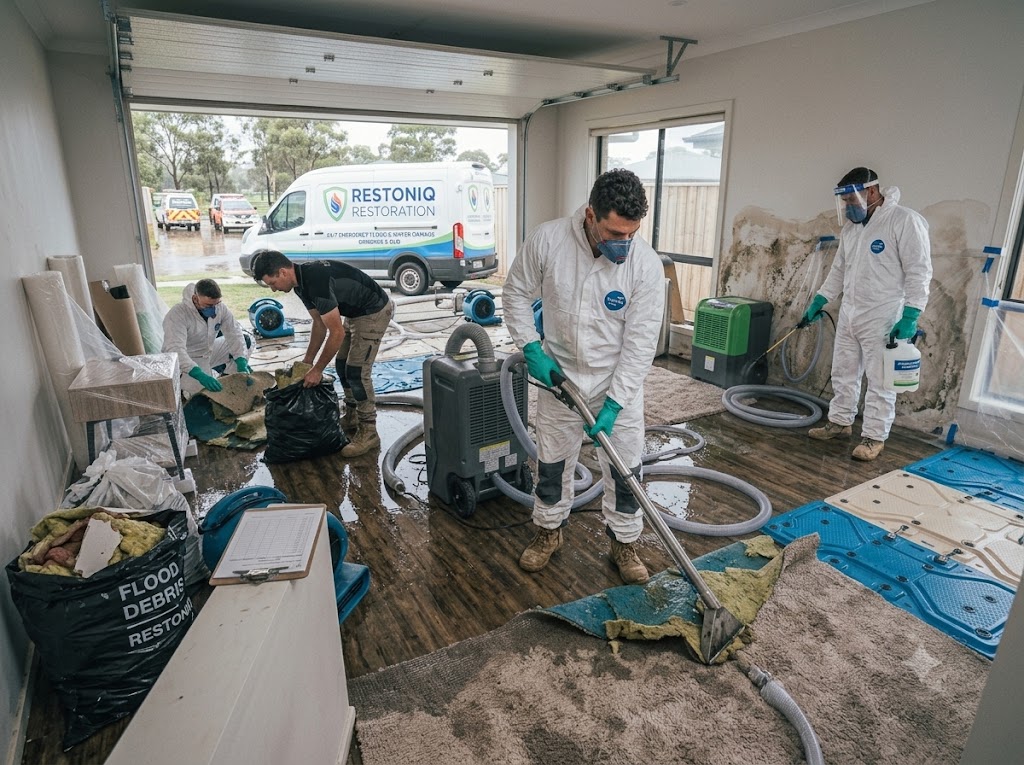
Water from canals, creeks or overland flow can contain sewage and debris. Carpet and underlay touched by it should be removed, and hard surfaces sanitised. Our flood clean-up team handles this safely.
8. Dry the Structure Properly
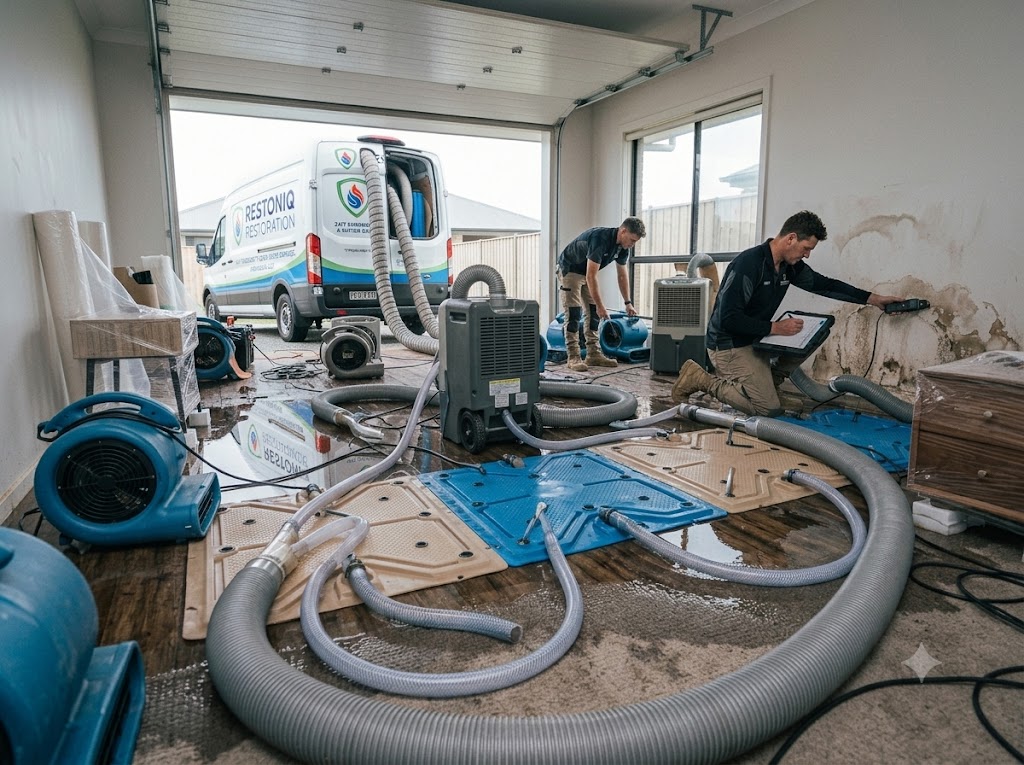
The Gold Coast’s humidity means wet walls and floors will not dry naturally in time to prevent mould. Commercial dehumidifiers and air movers with daily monitoring are needed. Learn about structural drying.
9. Prevent Mould After the Storm
Watch for musty odours and spotting over the following weeks. Read about mould after flood and book mould and bacteria control if needed.
Preparing for the Next Storm Season
- Clear gutters and downpipes before summer
- Check window seals and door weather strips
- Trim trees near the house
- Know your flood risk using City of Gold Coast flood information
- Keep copies of insurance documents in a waterproof bag
Brisbane residents should also see our Brisbane storm damage checklist.
Frequently Asked Questions
Who do I call for Gold Coast storm damage?
Call 000 in a life-threatening emergency, the SES on 132 500 for emergency roof help, Energex on 13 19 62 for fallen powerlines, and a restorer for water extraction and drying.
Do you service the whole Gold Coast?
Yes. Restoniq services the Gold Coast and northern suburbs through to Brisbane, 24/7.
How quickly can drying start?
Our emergency team aims to start extraction and drying on the first visit.
Will my insurer cover storm damage?
Most home policies cover storm damage. Flood cover varies, so check your PDS.
Get 24/7 Emergency Help From Restoniq
Restoniq provides 24/7 storm and flood response across the Gold Coast and Brisbane. See our dedicated water damage restoration Gold Coast page or our main water damage restoration Brisbane service.
Need an emergency restoration team? Restoniq’s 24/7 emergency team covers Brisbane, Logan, Ipswich, Moreton Bay, Redlands and the Gold Coast. Call 042 022 3980 or request an urgent callback.