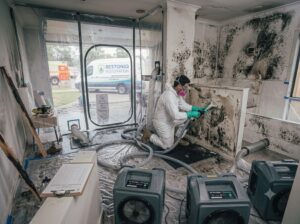
A sewer backflow or overflowing toilet is one of the most unpleasant emergencies a homeowner can face, and one of the most hazardous. Sewage contains bacteria, viruses and parasites that can cause serious illness. Proper sewage cleanup is about much more than removing the smell.
This guide explains the risks, what to do in the first hour and how professional sewage cleanup makes a Brisbane home safe again.
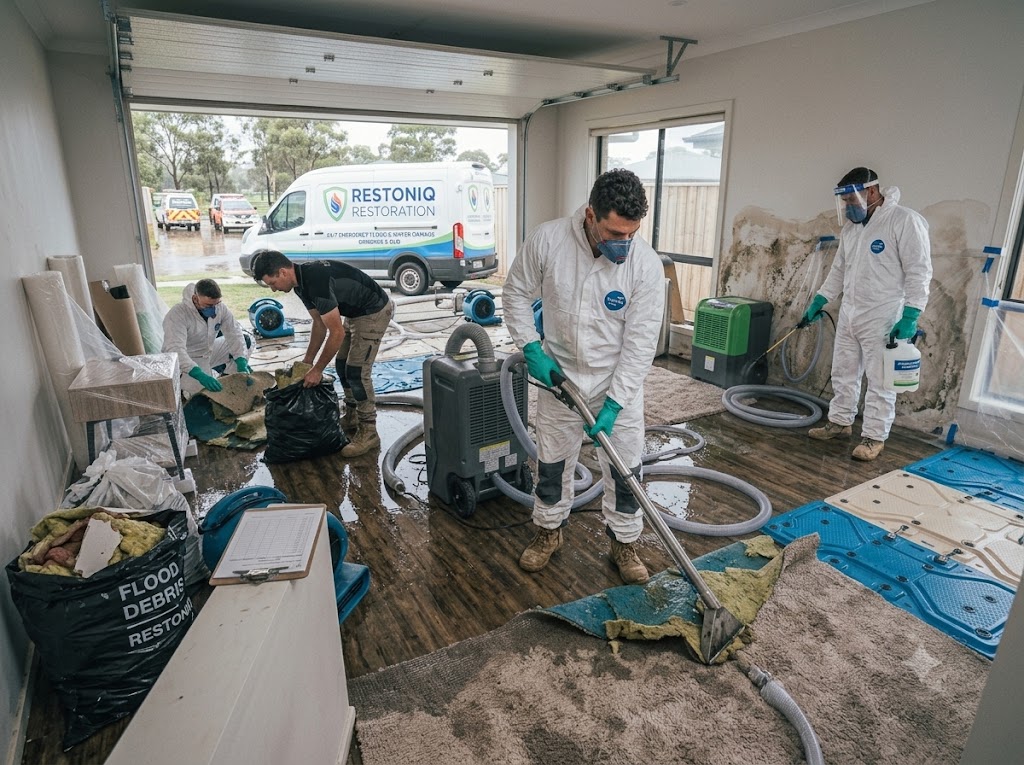
Table of Contents
Why Sewage Is a Category 3 Emergency
The IICRC S500 standard classifies water into three categories. Sewage is Category 3, or black water, the most contaminated level. It may carry E. coli, hepatitis A, norovirus and other pathogens. Any porous material it touches is considered contaminated. Read more in our guide to water damage categories and classes.
Rule 1: Keep People and Pets Away
Close off the affected area. Keep children, pets, elderly people and anyone with a weakened immune system well away. Do not walk sewage through the house on shoes.
Rule 2: Stop Using Water and Toilets
Every flush, shower or load of washing can push more sewage into the house if the main line is blocked. Stop using water until a plumber has cleared the blockage. If the overflow relief gully outside is spilling, the blockage may be in the public sewer. In Brisbane and Ipswich, report this to Urban Utilities.
Rule 3: Turn Off Power if Water Reaches Outlets
Switch off power to affected rooms at the switchboard if you can do so safely without touching water.
Rule 4: Do Not Use Household Fans or Vacuums
Fans can spread contaminated aerosols through the house. Household vacuums are not designed for contaminated water and become a health hazard themselves.
Water damage happening right now? Restoniq’s 24/7 emergency team covers Brisbane, Logan, Ipswich, Moreton Bay, Redlands and the Gold Coast. Call 042 022 3980 or request an urgent callback.
Rule 5: Document the Damage
Photograph the source, the extent of the spill and affected belongings. Insurance generally covers sudden sewage overflow damage inside the home, but evidence matters. See our insurance claim guide.

Rule 6: Expect Some Items to Be Discarded
Carpet and underlay soaked by sewage cannot be safely cleaned and must be removed. The same applies to mattresses, upholstered furniture, cardboard, MDF and particleboard. Hard, non-porous items such as tiles, metal and sealed timber can usually be cleaned and disinfected.
Plasterboard that has wicked sewage is typically cut out at least 300 millimetres above the visible tide line.
Rule 7: Use Trained Sewage Cleanup Technicians
Professional sewage cleanup follows a set process:
- Containment and protective equipment
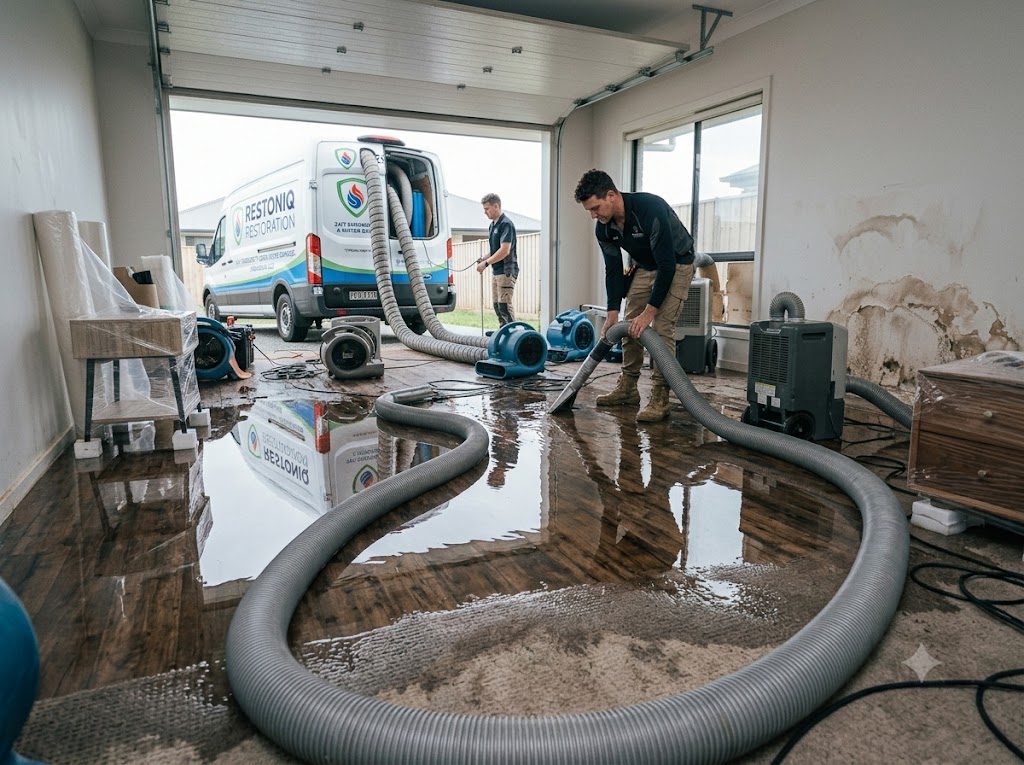
- Extraction of contaminated water and solids
- Removal and bagging of unsalvageable materials
- Cleaning and application of hospital-grade antimicrobial treatments
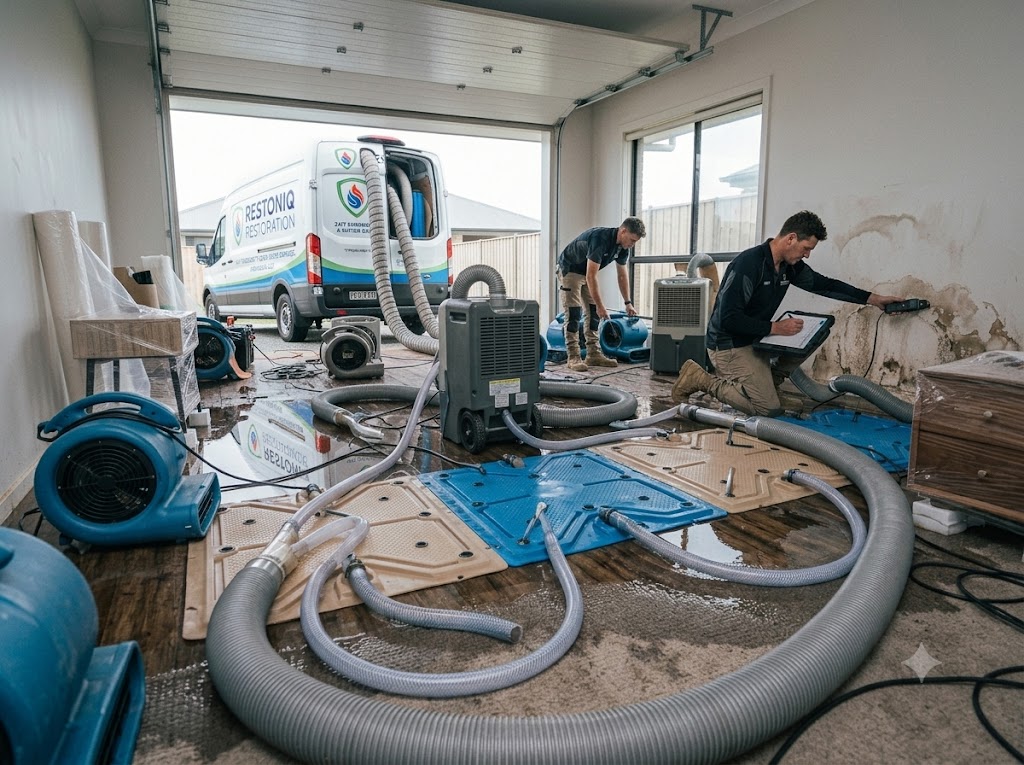
- Structural drying with dehumidifiers and air movers
- Final inspection and odour control
This combines our water extraction, structural drying and mould and bacteria control services.
How Long Does Sewage Cleanup Take?
A small toilet overflow on tiles may take a few hours. A sewer backflow affecting carpeted rooms usually takes one day for cleanup and removal, followed by three to five days of drying. Rebuild works start once the area is confirmed clean and dry.
Preventing a Sewer Backflow
- Never flush wipes, sanitary items or fats down drains
- Keep your overflow relief gully clear and above garden level
- Have tree roots near sewer lines checked by a plumber
- Ask a plumber about a backflow prevention valve if your home is low-lying
Frequently Asked Questions
Is it safe to clean up sewage myself?
Small toilet overflows on hard floors can be cleaned with gloves and disinfectant. Any sewage that reaches carpet, walls or a large area should be handled by trained technicians because of the health risks.
Can carpet be saved after sewage?
No. Carpet and underlay contaminated by sewage should be removed and replaced. Hard surfaces can usually be cleaned and sanitised.
Does insurance cover sewage cleanup?
Most home insurance policies cover sudden overflow or escape of sewage inside the home. Blockages caused by tree roots on your property may have conditions, so check your policy.
How do you get rid of the sewage smell?
The smell disappears once contaminated materials are removed, surfaces are disinfected and the structure is dried. Air scrubbers and deodorisation may also be used.
Get 24/7 Emergency Help From Restoniq
Sewage cleanup needs the right protective gear, antimicrobial products and drying equipment. Restoniq responds 24/7 to sewage emergencies across Brisbane and the Gold Coast, and works directly with your insurer. Learn more about our flood and contaminated water clean-up or our main water damage restoration Brisbane service.
Need an emergency restoration team? Restoniq’s 24/7 emergency team covers Brisbane, Logan, Ipswich, Moreton Bay, Redlands and the Gold Coast. Call 042 022 3980 or request an urgent callback.