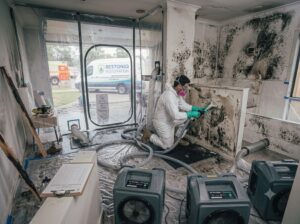
Mould after flood is one of the most common and costly forms of secondary damage. In South East Queensland’s warm, humid climate, mould can start growing on wet materials within 24 to 48 hours, often in places you cannot see, such as inside wall cavities, under floor coverings and behind cabinetry.
This guide explains how mould after flood develops, the health risks, and the steps that stop it before it takes hold.

Table of Contents
How Fast Does Mould Grow After a Flood?
Mould spores are always in the air. They need three things to grow: moisture, warmth and food. After a flood, a Brisbane home has all three. Plasterboard paper, timber, carpet backing, dust and even soap scum are food sources. In typical conditions, colonies can begin within one to two days, and visible growth often appears within a week if materials stay wet.
Where Mould After Flood Hides
- Inside wall cavities, on the back of plasterboard
- Under carpet underlay and floating floors
- Behind and under kitchen and bathroom cabinets
- In subfloors and under Queenslander homes
- In ceiling insulation after roof leaks
- Inside furniture, mattresses and stored boxes
Health Risks of Mould
Mould can trigger allergies, asthma, sinus problems and skin irritation. People with weakened immune systems, young children and older people are more vulnerable. Queensland Health recommends cleaning up and drying out quickly after flooding and wearing protective equipment when handling mould.
1. Remove Water Within 24 Hours
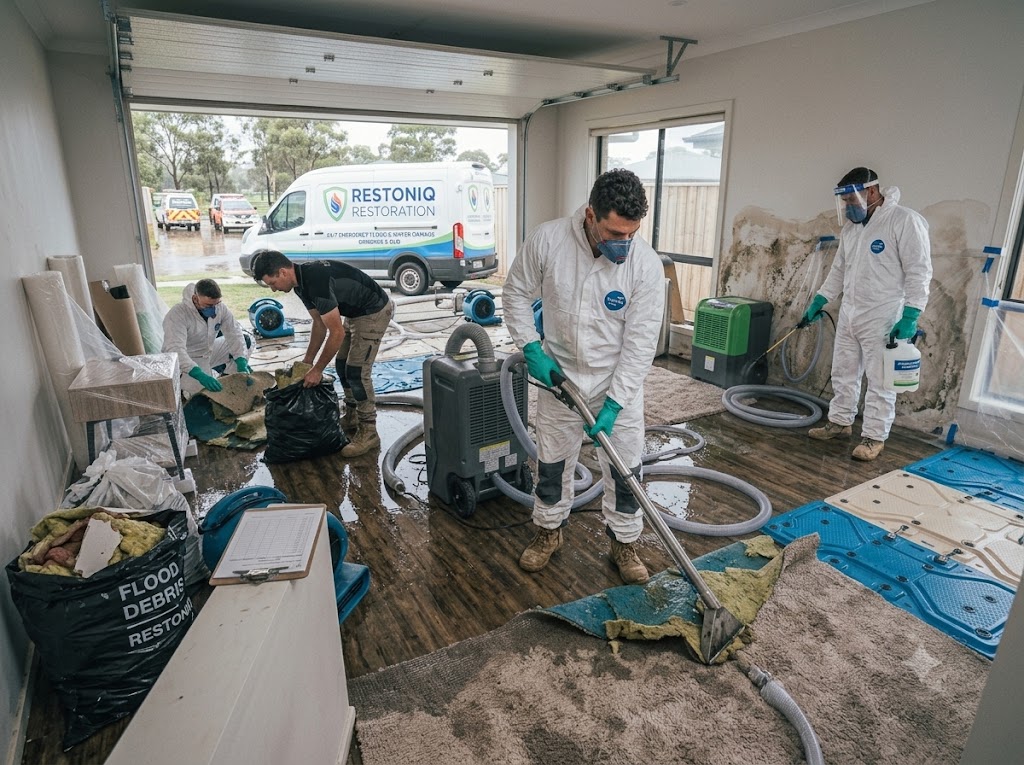
The single biggest factor in preventing mould after flood is speed. Professional water extraction removes far more water than mops or wet vacs.
2. Remove Saturated Porous Materials
Floodwater is contaminated. Carpet, underlay, mattresses and plasterboard that soaked up floodwater usually need removal. Our flood clean-up team removes and disposes of them safely.
Water damage happening right now? Restoniq’s 24/7 emergency team covers Brisbane, Logan, Ipswich, Moreton Bay, Redlands and the Gold Coast. Call 042 022 3980 or request an urgent callback.
3. Clean and Apply Antimicrobial Treatment
Hard surfaces, framing and slab floors should be cleaned and treated with an antimicrobial product designed for water damage restoration.
4. Dry the Structure, Not Just the Air
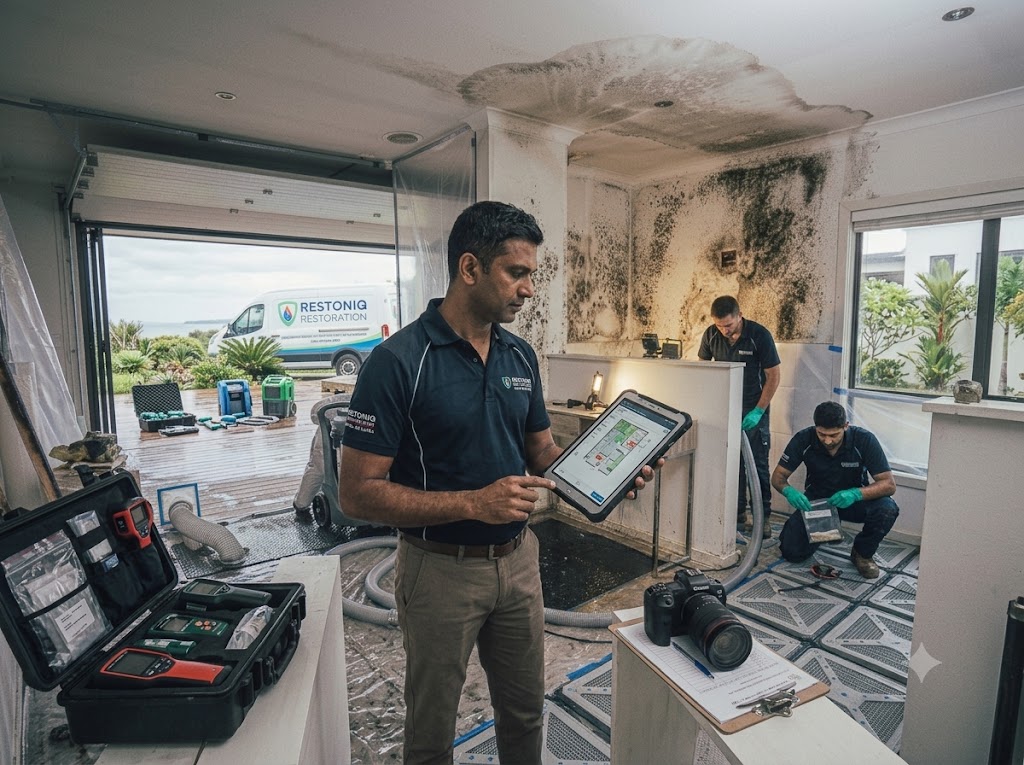
Opening windows and running fans is not enough. Commercial dehumidifiers and air movers, monitored with moisture meters, dry framing and subfloors to safe levels. Learn about structural drying.
5. Measure, Do Not Guess
A wall can feel dry while its timber frame is still wet. Moisture readings confirm when it is safe to rebuild. Read about moisture mapping and thermal imaging.
6. Do Not Paint Over Mould
Paint and bleach on porous surfaces hide mould without removing it. Bleach can also leave moisture behind that feeds regrowth.
7. Call Mould Specialists if Growth Appears
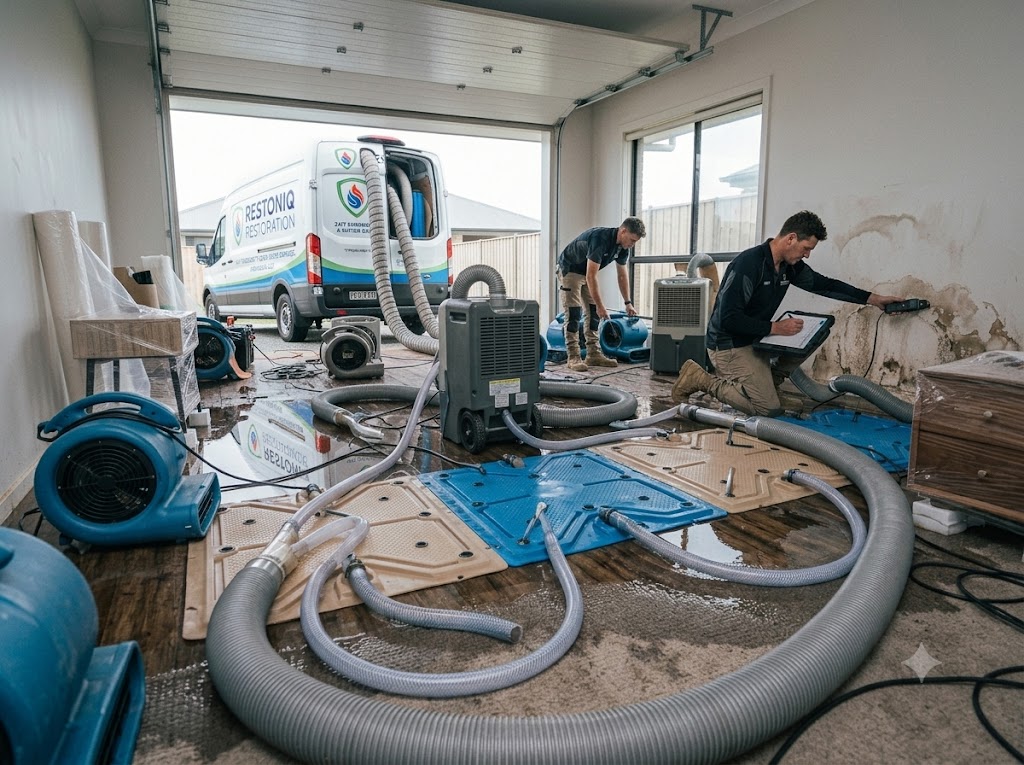
If you see or smell mould after flood, our mould and bacteria control team uses containment, HEPA air filtration and safe removal methods. See our guide to mould removal cost in Brisbane.
Frequently Asked Questions
How soon after a flood does mould grow?
In warm, humid conditions like Brisbane, mould can begin growing within 24 to 48 hours on wet materials.
Can I clean mould after flood myself?
Small areas on hard surfaces can be cleaned with protective gear. Large areas, hidden mould or mould on porous materials should be handled by professionals.
Does insurance cover mould after flood?
If your policy covers flood and the mould results directly from it, removal is often included. Mould from long-term moisture is usually excluded.
How do I know if there is mould inside my walls?
Musty smells, staining, peeling paint and high moisture readings are warning signs. Thermal imaging and moisture meters help locate hidden moisture.
Get 24/7 Emergency Help From Restoniq
Stopping mould after flood comes down to fast, thorough drying. Restoniq responds 24/7 across Brisbane and the Gold Coast with extraction, antimicrobial treatment and monitored drying. Read our related guide, is mould hiding in your walls, or learn about our water damage restoration Brisbane service.
Need an emergency restoration team? Restoniq’s 24/7 emergency team covers Brisbane, Logan, Ipswich, Moreton Bay, Redlands and the Gold Coast. Call 042 022 3980 or request an urgent callback.