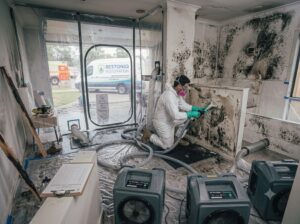
A water damage insurance claim can feel overwhelming when your home is wet and your routine is upside down. Knowing what your insurer needs, and what they expect from you, makes the process much faster. This guide is written for Queensland homeowners, landlords and tenants.
Note: this is general information only, not legal or financial advice. Always read your own Product Disclosure Statement (PDS).
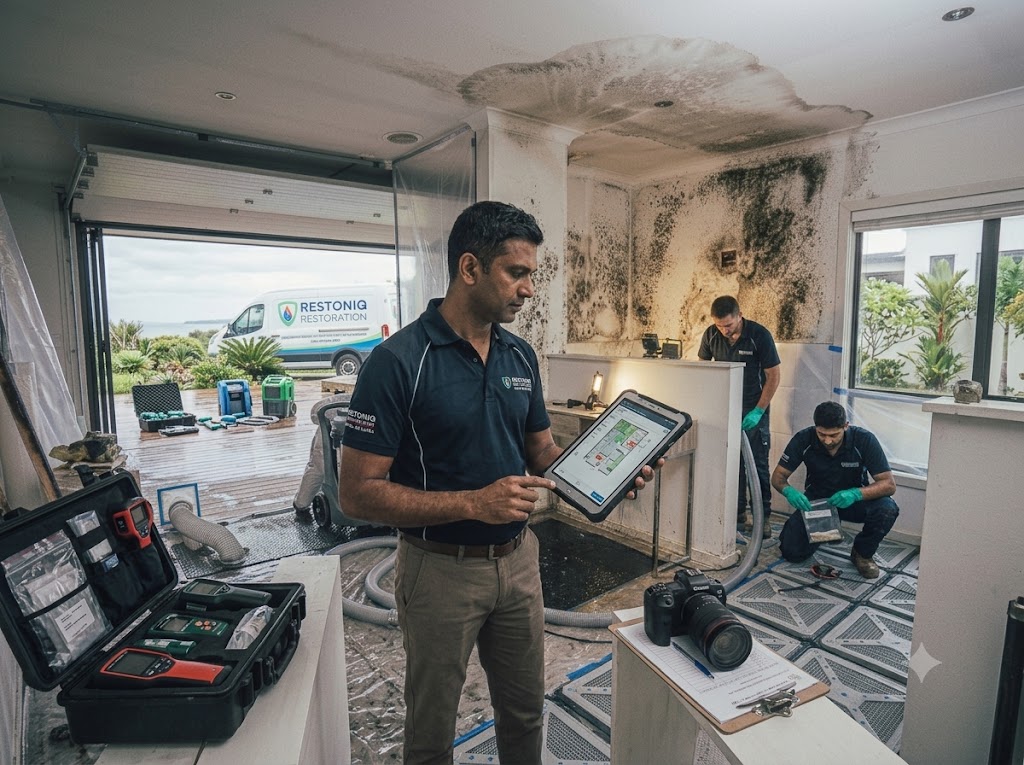
Table of Contents
What a Water Damage Insurance Claim Usually Covers
Most home and contents policies in Australia cover sudden and accidental water damage, including:
- Burst pipes and failed flexi hoses
- Leaking or burst hot water systems
- Overflowing appliances such as washing machines and dishwashers
- Storm damage, including rain entering through a damaged roof
- Flood, if your policy includes flood cover
What Is Often Excluded
- Gradual leaks that have been happening over weeks or months
- Damage caused by poor maintenance or wear and tear
- Failed shower waterproofing that has leaked over time
- The cost of repairing the pipe or appliance that failed
- Mould caused by long-term moisture
A water damage insurance claim for a slow leak is often declined, so read our guide to signs of water damage behind walls to catch hidden leaks early.
Step 1: Stop the Damage and Make Safe
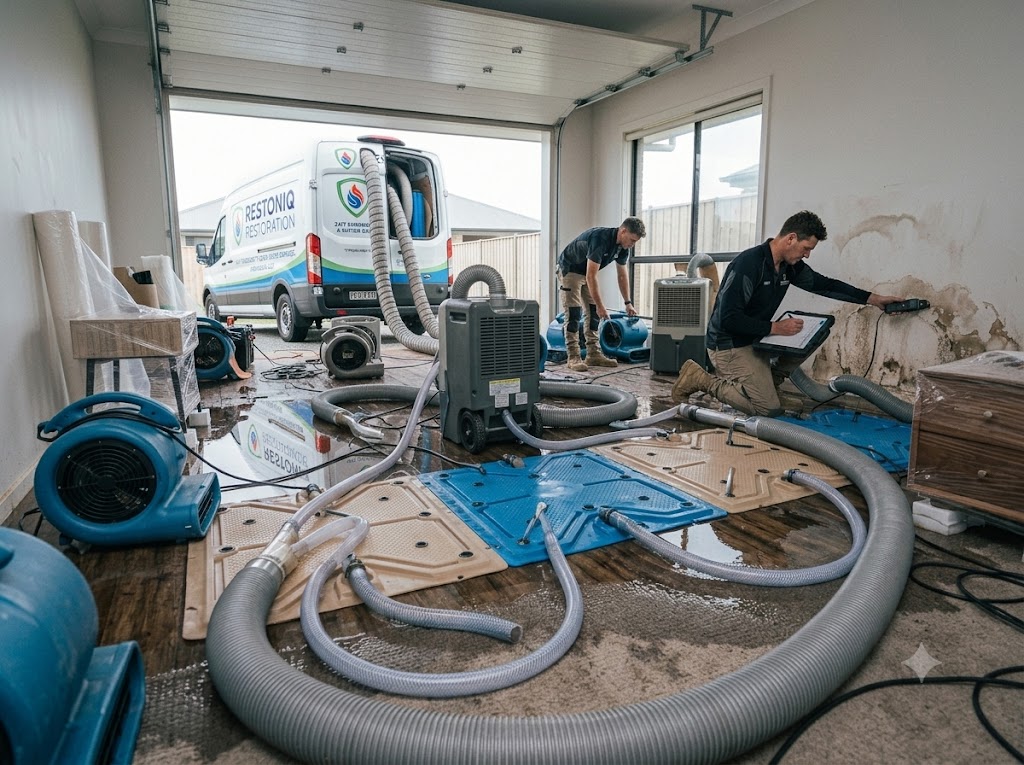
Policies require you to take reasonable steps to prevent further damage. Turn off the water, switch off power to wet areas and arrange emergency water extraction. Insurers generally support urgent mitigation work because it reduces the size of the water damage insurance claim. See our burst pipe emergency steps.
Step 2: Photograph and Video Everything
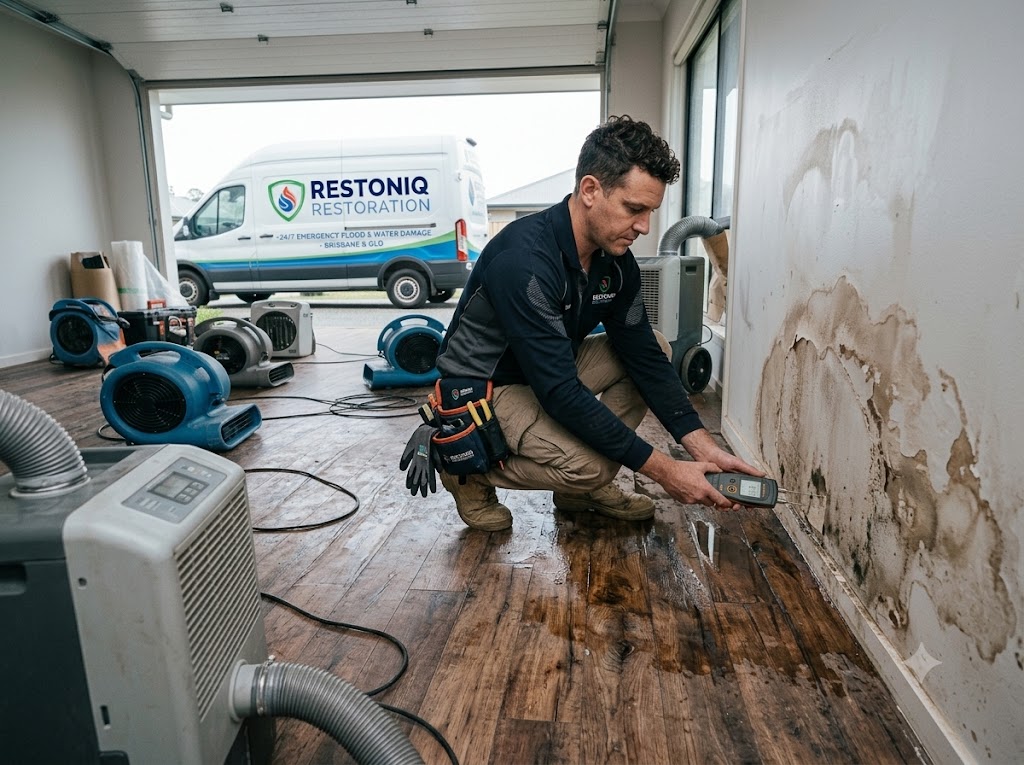
Record the source, the water, every affected room and damaged contents before cleaning up. Wide shots and close-ups both help. Photos are the backbone of any water damage insurance claim.
Step 3: Keep the Failed Part
Keep a split flexi hose, failed valve or broken fitting. It can help your insurer recover costs from a manufacturer or tradesperson.
Water damage happening right now? Restoniq’s 24/7 emergency team covers Brisbane, Logan, Ipswich, Moreton Bay, Redlands and the Gold Coast. Call 042 022 3980 or request an urgent callback.
Step 4: Lodge Your Water Damage Insurance Claim Early
Contact your insurer as soon as you can. Ask for a claim number, whether they have a preferred restorer, and what emergency costs they will reimburse.
Step 5: Get a Professional Assessment
A restorer’s water damage assessment records moisture readings, affected materials, the water category and a recommended scope of works. This report gives your assessor clear, objective evidence to support the water damage insurance claim.
Step 6: Keep Every Receipt
Keep receipts for tarps, emergency plumbing, temporary accommodation and replacement essentials. Many policies include temporary accommodation if your home is unliveable.
Step 7: Get a Drying Certificate
Before repairs start, ask for a drying report showing materials reached normal moisture levels. This protects you if mould or swelling appears later. Learn about structural drying.

Step 8: Know Your Rights
Insurers that subscribe to the General Insurance Code of Practice must handle every water damage insurance claim fairly and within set timeframes. If you are unhappy with a decision, use your insurer’s internal complaints process first. If it is not resolved, you can contact the Australian Financial Complaints Authority (AFCA), a free, independent service.
Landlords, Tenants and Units
Landlord building insurance usually covers the structure, while tenants need their own contents cover. In strata buildings, the body corporate policy covers common property. Read our guides on water damage in rental properties and body corporate water damage.
Frequently Asked Questions
How long do I have to lodge a water damage insurance claim?
Lodge as soon as possible. Delays can make it harder to prove the damage was sudden, and policies require you to prevent further damage.
Can I choose my own restoration company?
Many insurers have preferred suppliers, but in an emergency you can usually arrange urgent mitigation. Ask your insurer and keep all invoices and reports.
Will my insurer pay for mould removal?
If mould is a direct result of a sudden, covered water event, its removal is often included. Mould from long-term leaks or humidity is usually excluded.
What if my water damage insurance claim is denied?
Ask for the reasons in writing, use the internal complaints process, and if unresolved contact AFCA.
Get 24/7 Emergency Help From Restoniq
Restoniq works with all major insurers across Queensland. We provide emergency extraction, drying, moisture mapping and detailed reports so your water damage insurance claim has the evidence it needs. Read about water damage restoration costs or our water damage restoration Brisbane service.
Need an emergency restoration team? Restoniq’s 24/7 emergency team covers Brisbane, Logan, Ipswich, Moreton Bay, Redlands and the Gold Coast. Call 042 022 3980 or request an urgent callback.