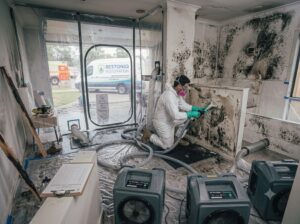
When water hits the floor, many people reach for towels, a mop or a hired wet vac. DIY water extraction can help with very small spills, but for anything larger it often leaves most of the water behind in the underlay, subfloor and walls.
Here are six differences between DIY water extraction and professional extraction, so you can decide what your situation needs.
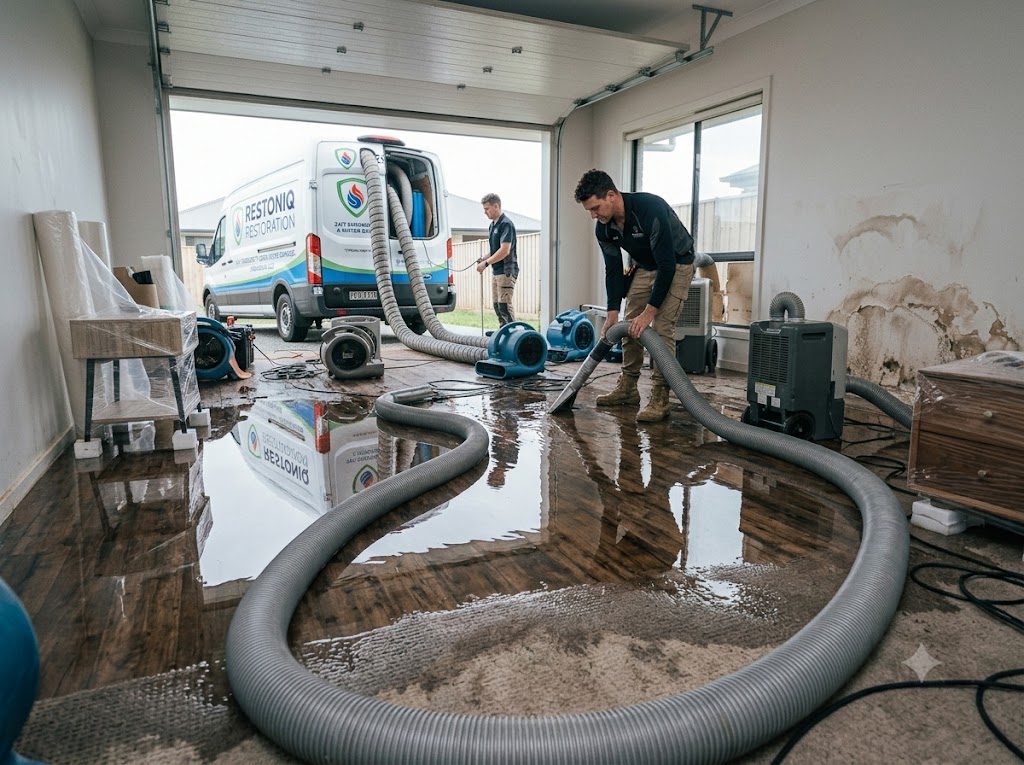
Table of Contents
1. Suction Power and Water Removed
A household wet vac has limited suction and a small tank. Professional truck-mounted and portable extractors generate far stronger vacuum and can pull water out of carpet and underlay, not just off the surface. More water removed at the start means much faster drying. See our water extraction service.
2. Hidden Moisture
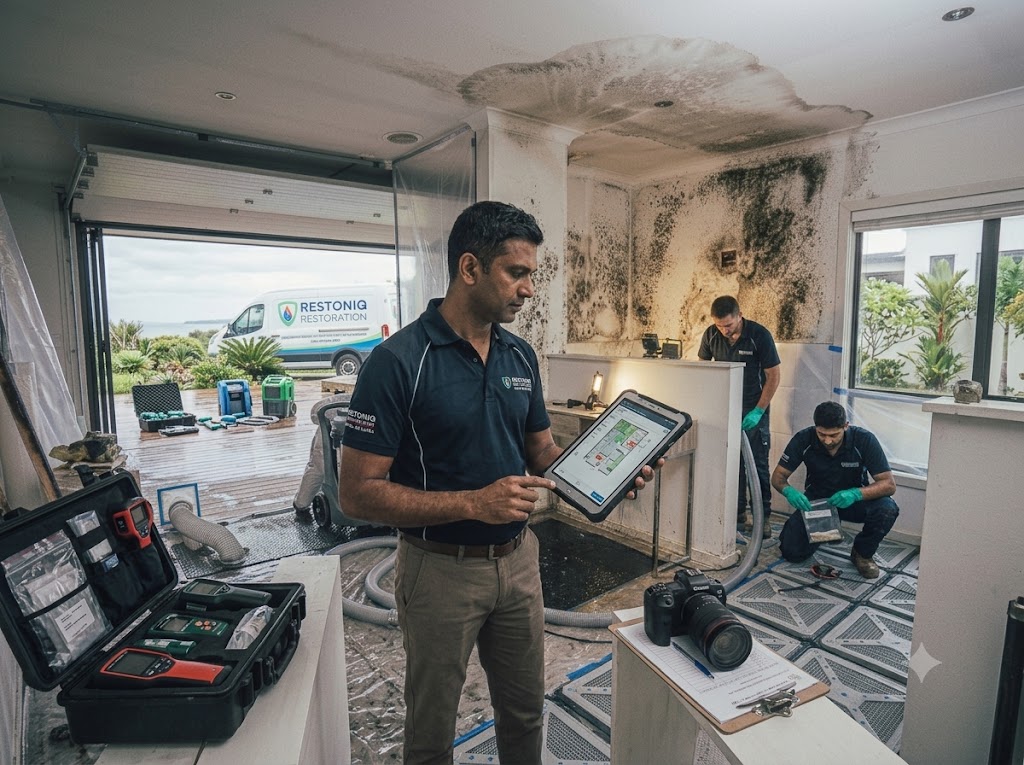
DIY water extraction deals with what you can see. Professionals use moisture meters and thermal imaging to find water that has wicked into walls, kickboards and subfloors. Read about moisture mapping.
3. Drying Equipment
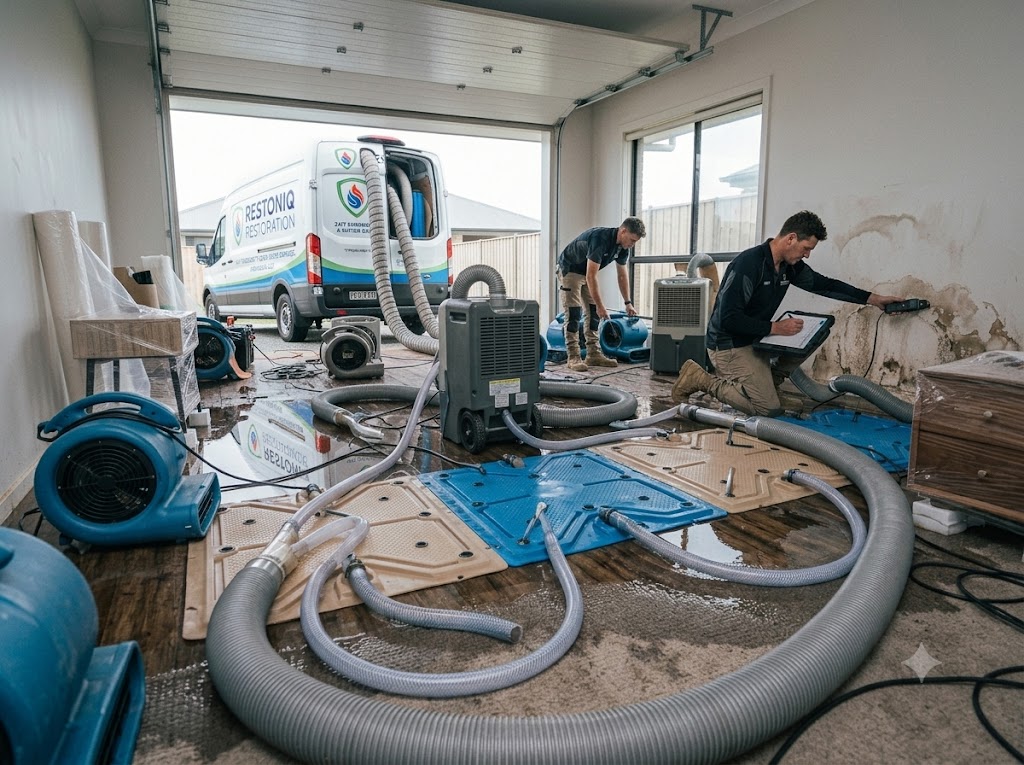
Removing water is only the first stage. Commercial dehumidifiers and air movers remove the remaining moisture from materials and air. Domestic fans and dehumidifiers are not designed for this volume. Learn about structural drying.
4. Contamination and Safety
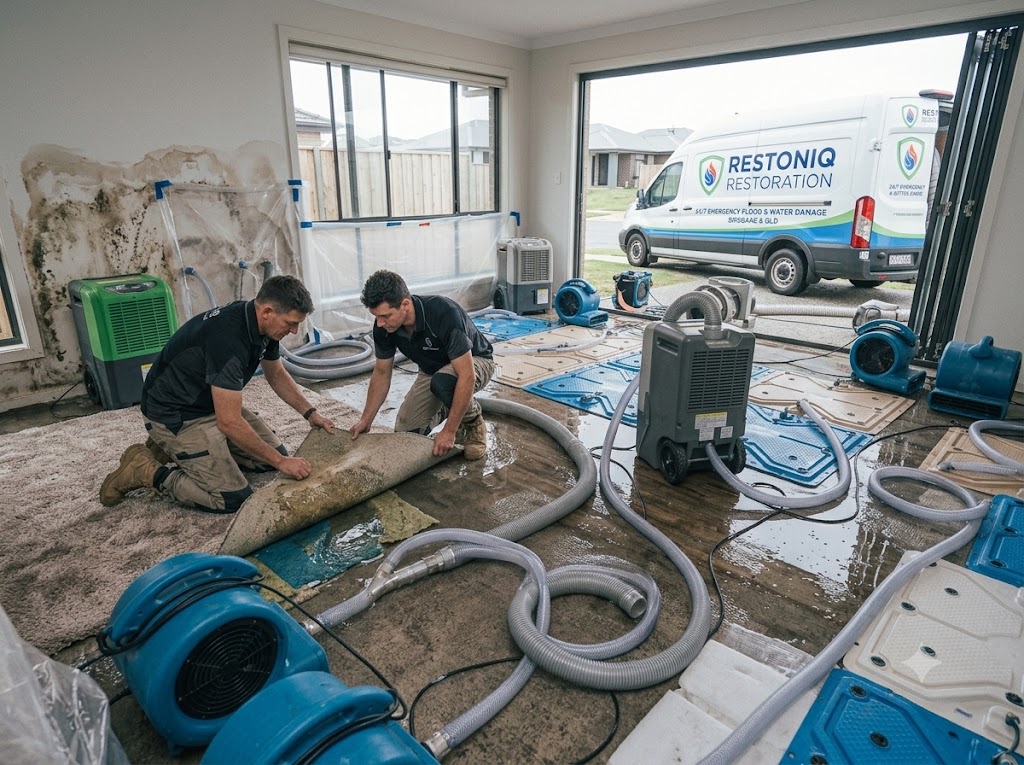
Grey water and black water carry bacteria and viruses. DIY water extraction of contaminated water puts you at risk and can spread contamination. Professionals use protective equipment and antimicrobial treatments. See water damage categories.
Water damage happening right now? Restoniq’s 24/7 emergency team covers Brisbane, Logan, Ipswich, Moreton Bay, Redlands and the Gold Coast. Call 042 022 3980 or request an urgent callback.
5. Mould Risk
Materials that look dry but are still wet inside can grow mould within days in Brisbane’s climate. Professional drying is verified with readings before equipment is removed. Read about mould after water damage.
6. Insurance Documentation
Insurers want evidence. Professionals provide photos, moisture logs and drying reports. Without them, it can be harder to support a claim if problems appear later. See our insurance claim guide.
When DIY Water Extraction Is Fine
- A small spill on tiles or vinyl cleaned up within minutes
- Clean water only
- No water under skirting boards or into carpet edges
- No musty smell over the following days
When to Call Professionals
- Carpet or underlay is wet
- Water has reached walls, cabinets or another room
- The water came from a toilet, drain, appliance or outside
- Water came through a ceiling
- The leak ran for more than an hour
The IICRC sets the industry standard for professional extraction and drying.
Frequently Asked Questions
Can I use a wet vac to extract water from carpet?
A wet vac can remove surface water, but it cannot remove most of the water in underlay. Professional extraction and drying are needed for soaked carpet.
How much does professional water extraction cost?
Costs depend on area, water category and drying time. Small jobs may be a few hundred dollars, while larger losses cost more. Insurance often covers it.
How quickly should water be extracted?
As soon as possible, ideally within the first few hours, to prevent swelling, odours and mould.
Do I still need drying after extraction?
Yes. Extraction removes bulk water, but materials still hold moisture that must be dried with dehumidifiers.
Get 24/7 Emergency Help From Restoniq
Restoniq offers 24/7 professional water extraction and drying across Brisbane and the Gold Coast. If DIY water extraction is not enough, call our team. Learn more about wet carpet drying or our water damage restoration Brisbane service.
Need an emergency restoration team? Restoniq’s 24/7 emergency team covers Brisbane, Logan, Ipswich, Moreton Bay, Redlands and the Gold Coast. Call 042 022 3980 or request an urgent callback.