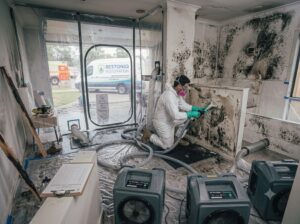
Water damage behind walls is one of the most expensive problems a homeowner can face, mainly because it goes unnoticed. A slow drip from a shower mixer or a pinhole leak in a pipe can soak framing and plasterboard for months before anything shows on the surface.
Here are nine warning signs of water damage behind walls, and what to do if you spot them.
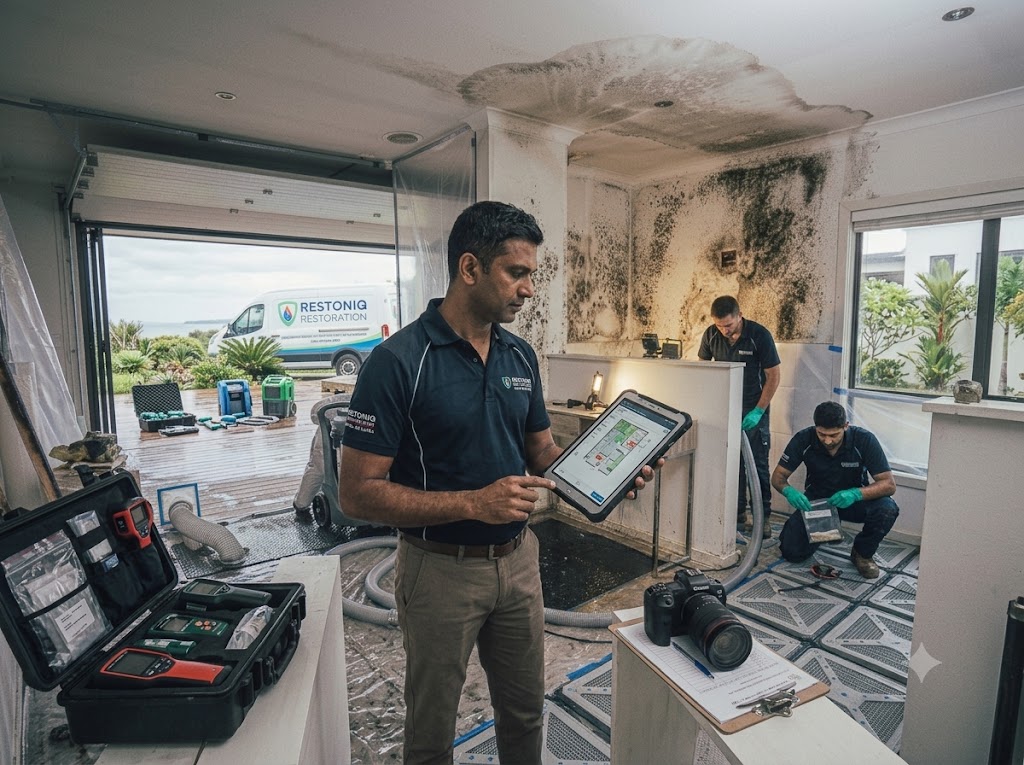
Table of Contents
9 Signs of Water Damage Behind Walls
- Musty smell in one room or near a wet area wall
- Bubbling, peeling or blistering paint
- Stains or tide marks near skirting boards
- Swollen or soft skirting boards and architraves
- Warped or lifting flooring along a wall
- Mould spots at the base of the wall or behind furniture
- Loose or cracked tiles and crumbling grout in showers
- A higher water bill with no change in usage
- The sound of running water when taps are off
Common Causes in Brisbane Homes
- Failed shower waterproofing membranes
- Leaking shower mixers and tap bodies inside the wall
- Pinhole leaks in old copper pipes
- Leaking toilet cisterns and connections
- Dishwasher and fridge water lines
- Rain entering through window flashings or cracked render
How to Check for a Hidden Water Leak
Turn off every tap and water-using appliance, then read your water meter. Wait an hour without using water and read it again. If the numbers have moved, you probably have a leak. Urban Utilities has guidance on checking for leaks.
Water damage happening right now? Restoniq’s 24/7 emergency team covers Brisbane, Logan, Ipswich, Moreton Bay, Redlands and the Gold Coast. Call 042 022 3980 or request an urgent callback.

How Professionals Find Water Damage Behind Walls
Restorers use non-invasive tools to locate moisture without opening walls:
- Thermal imaging shows cooler areas caused by evaporation.
- Pin and pinless moisture meters confirm moisture levels in plaster and timber.
- Hygrometers measure humidity in cavities through tiny holes.
Read more about moisture mapping and thermal imaging and our water damage assessment service.
Fixing Water Damage Behind Walls
- A licensed plumber repairs the leak
- Moisture is mapped to define the affected area
- Cavities are dried using injection drying or small vent holes
- Mould-affected or delaminated plasterboard is removed if needed
- Framing is treated and dried to normal levels
- The wall is repaired and repainted
Our structural drying process often avoids removing whole walls.
Insurance and Slow Leaks
Many insurers exclude damage from gradual leaks, so catching water damage behind walls early matters. See our water damage insurance claim guide. If mould is present, read is mould hiding in your walls.

Frequently Asked Questions
How do I know if water is leaking behind a wall?
Look for musty smells, stains, bubbling paint, swollen skirting boards and a water meter that moves when all taps are off.
Can water damage behind walls be dried without removing plasterboard?
Often yes, if caught early and the plasterboard is not mouldy or delaminated. Cavity drying systems push dry air through small holes.
Is water damage behind walls covered by insurance?
Sudden leaks are often covered, but gradual leaks are frequently excluded. Check your policy.
How long does it take to dry a wall cavity?
Most wall cavities dry in three to seven days with the right equipment.
Get 24/7 Emergency Help From Restoniq
If you suspect water damage behind walls, Restoniq can locate the moisture, dry it properly and provide a report for your insurer. We service Brisbane and the Gold Coast 24/7. Learn about our water damage restoration Brisbane service.
Need an emergency restoration team? Restoniq’s 24/7 emergency team covers Brisbane, Logan, Ipswich, Moreton Bay, Redlands and the Gold Coast. Call 042 022 3980 or request an urgent callback.