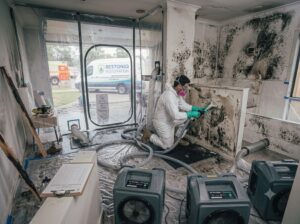
When a restorer inspects your home, two of the first things they record are the water damage category and the class. These terms come from the IICRC S500, the industry standard for professional water damage restoration used in Australia and around the world.
Understanding water damage categories and classes helps you make sense of your restorer’s report, your insurer’s decisions and why some materials can be saved while others must go.
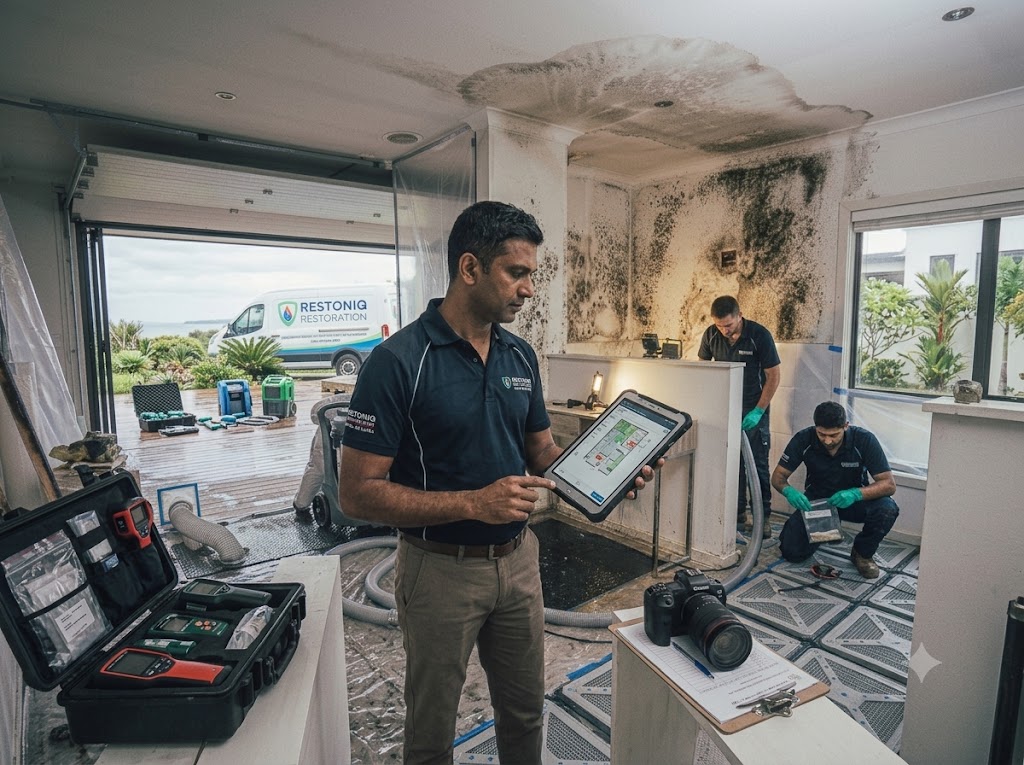
Table of Contents
What Are Water Damage Categories?
Water damage categories describe how contaminated the water is. They decide what can be cleaned and kept, what must be removed, and what protective equipment technicians need.
Category 1: Clean Water
Water from a sanitary source, such as a burst supply pipe, a leaking hot water system or a tap left running. It poses little health risk initially. Carpet, underlay and plasterboard can often be dried in place if work starts quickly. See our burst pipe guide.
Category 2: Grey Water
Water with significant contamination that could cause illness. Examples include washing machine and dishwasher discharge, toilet overflow with urine but no faeces, and aquarium water. Items need cleaning and antimicrobial treatment; underlay is often replaced. Read our washing machine flood guide.
Water damage happening right now? Restoniq’s 24/7 emergency team covers Brisbane, Logan, Ipswich, Moreton Bay, Redlands and the Gold Coast. Call 042 022 3980 or request an urgent callback.
Category 3: Black Water
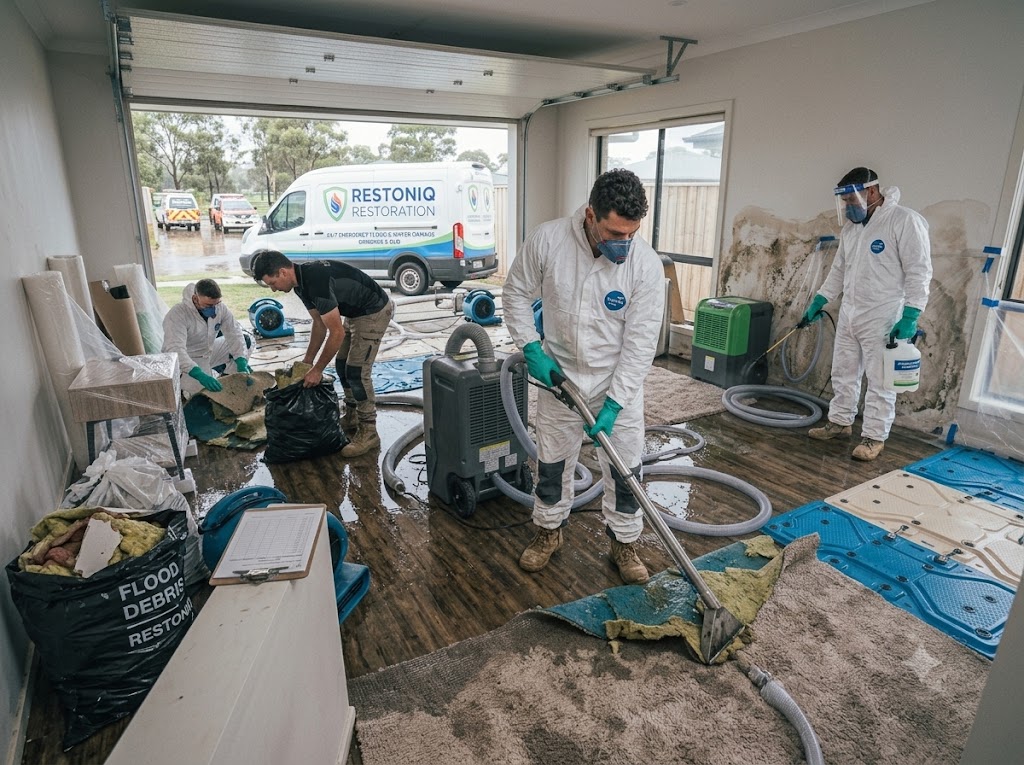
Grossly contaminated water containing pathogens or toxins. This includes sewage, rising floodwater from rivers and creeks, and seawater. Porous materials such as carpet, underlay and saturated plasterboard must be removed. See our sewage cleanup and flood clean-up pages.
Categories Can Get Worse Over Time
Category 1 water does not stay clean. As it sits and contacts building materials, dust and soil, bacteria grow and it can become Category 2 within 48 hours, and Category 3 after that. This is another reason to call a restorer quickly.
What Are Water Damage Classes?
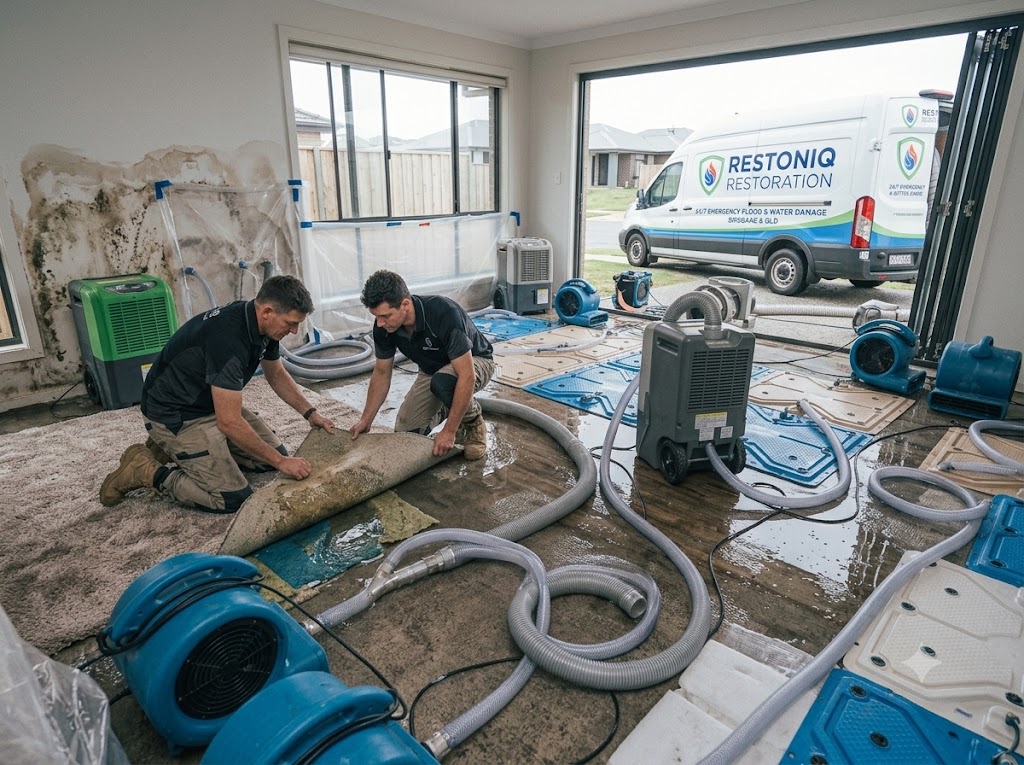
Water damage classes describe how much water is present and how hard it will be to dry. Classes guide how many dehumidifiers and air movers are needed.
- Class 1: a small area with little absorption, such as part of a room with low-porosity materials.
- Class 2: a whole room with wet carpet and wicking up walls less than about 60 centimetres.
- Class 3: water from above, with saturated ceilings, walls, insulation and floors.
- Class 4: specialty drying for low-porosity materials like hardwood floors, concrete, stone and plaster that hold moisture deeply.
Why Categories and Classes Matter for You
Together, water damage categories and classes determine the cost, the time to dry, whether you can stay in the home and what your insurer will approve. A good water damage assessment report will state both, alongside moisture readings and photos. For drying, see our structural drying service.
You can read more about the standard on the IICRC website.
Frequently Asked Questions
What is the most dangerous water damage category?
Category 3, or black water, which includes sewage and floodwater. It can contain bacteria, viruses and chemicals.
Can Category 1 water damage become Category 3?
Yes. Clean water degrades over time as it contacts building materials and bacteria grow, especially in warm weather.
What class is water damage through a ceiling?
Water from above that saturates ceilings, walls and floors is usually Class 3.
Do water damage categories affect insurance?
They affect the scope of work and cost. Insurers rely on the restorer’s category and class assessment when approving the work.
Get 24/7 Emergency Help From Restoniq
Restoniq technicians classify every job using the IICRC S500 standard so you and your insurer know exactly what is needed and why. We respond 24/7 across Brisbane and the Gold Coast. Learn more about our water damage restoration Brisbane service or our emergency response process.
Need an emergency restoration team? Restoniq’s 24/7 emergency team covers Brisbane, Logan, Ipswich, Moreton Bay, Redlands and the Gold Coast. Call 042 022 3980 or request an urgent callback.