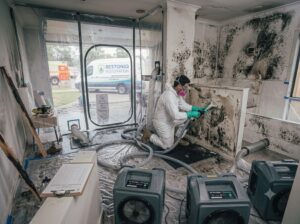
A hot water system leaking can go unnoticed for hours, especially when the unit sits in a cupboard, under the house or in the roof space. Hot water tanks in Australian homes commonly hold 125 to 315 litres, so a failed tank can release a lot of water quickly.
Here is what to do the moment you discover your hot water system leaking, and how to stop it turning into a major water damage claim.

Table of Contents
Step 1: Turn Off the Power or Gas
For an electric unit, switch off the hot water circuit at the switchboard. It is usually labelled “HWS” or “Hot Water”. For a gas unit, turn the gas control knob to off or pilot. For solar or heat pump systems, switch off the booster and any pump circuit.
Step 2: Shut Off the Cold Water Inlet
Find the cold water isolation valve on the pipe entering the tank and turn it clockwise. If it is seized or you cannot reach it, turn off the main stopcock at the front boundary.
Step 3: Find Where the Hot Water System Is Leaking
Not every leak means the tank has failed. Common sources include:
- Pressure and temperature relief (PTR) valve: a small amount of discharge is normal; constant flow is not.
- Expansion control valve on the cold side.
- Loose or corroded fittings at the inlet and outlet.
- The tank itself: water pooling from the base usually means internal corrosion and replacement.
Leave diagnosis and repair to a licensed plumber. Hot water systems store water at high temperature and pressure.
Water damage happening right now? Restoniq’s 24/7 emergency team covers Brisbane, Logan, Ipswich, Moreton Bay, Redlands and the Gold Coast. Call 042 022 3980 or request an urgent callback.
Step 4: Protect Floors and Ceilings
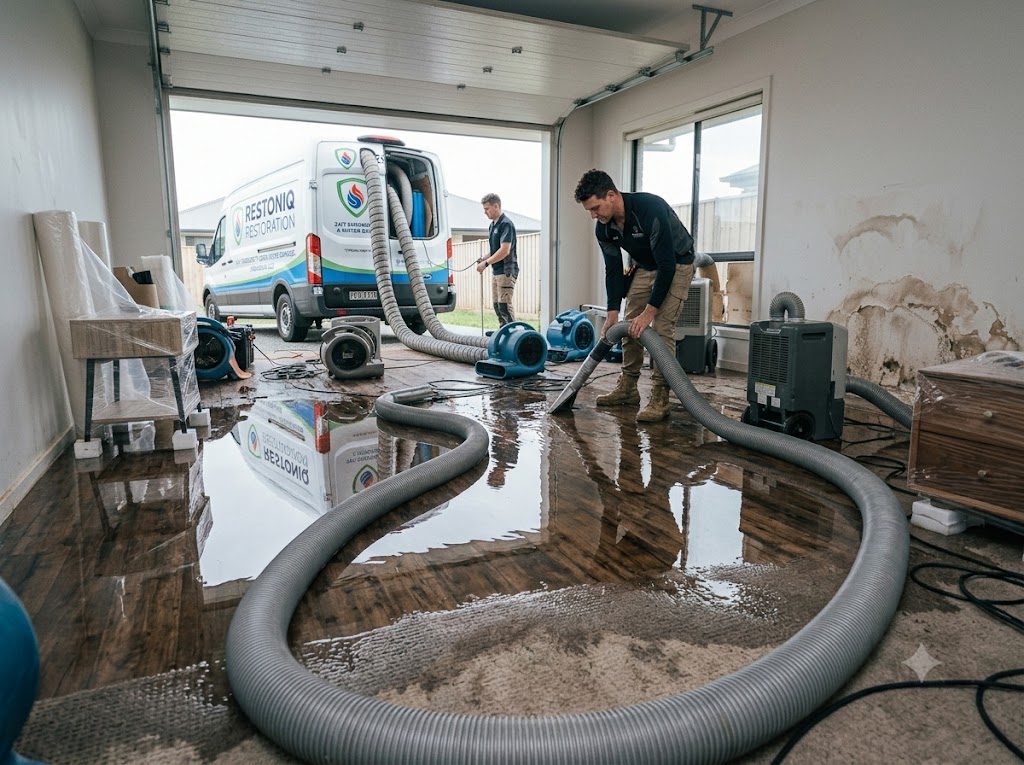
If the unit is inside, move items away and start removing water. If it is in the roof, check ceilings below for stains and sagging. Read our guide to ceiling water damage. For larger volumes, professional water extraction limits how far water travels into carpet and walls.
Step 5: Photograph and Call Your Insurer
Most home policies cover the resulting damage from a hot water system leaking suddenly, but usually not the replacement of the unit itself. Photograph the unit, its compliance plate and all damage. See our insurance claim guide.
Step 6: Dry the Structure Properly
Laundry floors, kitchen kickboards and the bottom of internal walls absorb water quickly. A restoration technician maps moisture with meters and thermal imaging, then sets up dehumidifiers and air movers for structural drying. Skipping this step often leads to swollen cabinetry and mould weeks later.

Warning Signs Before a Hot Water System Fails
- Rust-coloured hot water or rust stains around the base
- Rumbling or popping noises from sediment build-up
- Water constantly dripping from the PTR valve drain
- Damp patches or mould in the cupboard
- A unit more than 10 years old
Queensland’s QBCC requires hot water installations to be carried out by licensed plumbers. Ask your plumber to check the sacrificial anode and relief valves regularly.
Frequently Asked Questions
Is a hot water system leaking dangerous?
It can be. Water may be very hot, and leaks near electrical components are a shock risk. Turn off power or gas and keep clear until a plumber attends.
Can I still use hot water if the PTR valve is dripping?
A small occasional drip can be normal. A constant flow is not, and a plumber should check it.
Does insurance cover a hot water system leak?
Damage caused by a sudden leak is usually covered. The unit itself generally is not, unless it was damaged by an insured event such as a storm.
How long does it take to dry after a hot water system leak?
Most laundry and hallway leaks dry in three to five days with professional equipment.
Get 24/7 Emergency Help From Restoniq
If your hot water system is leaking, Restoniq can help 24/7 across Brisbane and the Gold Coast. We extract the water, dry the structure and document everything for your insurer. If carpet was affected, see our wet carpet drying service, or learn about our water damage restoration Brisbane team.
Need an emergency restoration team? Restoniq’s 24/7 emergency team covers Brisbane, Logan, Ipswich, Moreton Bay, Redlands and the Gold Coast. Call 042 022 3980 or request an urgent callback.