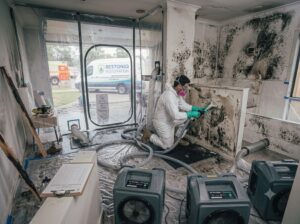
A burst pipe can push hundreds of litres of water into your home in under an hour. In Brisbane, where many houses have timber floors, plasterboard walls and carpet over particleboard, that water spreads fast and soaks into places you cannot see. The first 60 minutes after a burst pipe decide whether you are facing a simple dry-out or a full rebuild.
This guide walks you through exactly what to do when a burst pipe floods your home, in the order that matters. It is written by the Restoniq emergency team, who attend water damage jobs across Brisbane and the Gold Coast around the clock.

Table of Contents
Step 1: Shut Off the Main Water Supply
Your first job is to stop more water entering the house. Every Brisbane property has a main stopcock (also called the water meter tap). In most homes it sits at the front boundary, near the footpath, inside a small plastic or concrete box. Turn the handle clockwise until it stops.
Units and townhouses often have an isolation valve in the laundry, under the kitchen sink or in a meter cupboard on each floor. If you cannot find it, call your body corporate manager or building caretaker straight away.
If the burst pipe is on the council side of the meter, contact your water retailer. In Brisbane and Ipswich that is Urban Utilities, which runs a 24/7 faults line.
Step 2: Turn Off Power to Wet Areas
Water and electricity are a deadly mix. If water has reached power points, appliances, ceiling lights or the switchboard, switch off the affected circuits at the meter box. If the switchboard itself is wet, or you would need to stand in water to reach it, stay away and call a licensed electrician.
Never use a household vacuum or extension leads in standing water. Wait until the area is confirmed safe.
Step 3: Find the Source of the Burst Pipe
Once the water is off, work out where the leak came from. Common causes of a burst pipe in South East Queensland homes include:
- Ageing copper or galvanised pipes in older Queenslanders and post-war homes
- Failed flexi hoses under sinks, toilets and vanities
- High water pressure without a pressure-limiting valve
- Tree roots or ground movement cracking underground lines
- Poor workmanship on recent renovations
Take note of what failed. Your plumber, your insurer and your restoration technician will all ask.
Step 4: Photograph Everything Before You Clean
Insurers need evidence. Before you move furniture or mop, take clear photos and short videos of the burst pipe, the water level, wet flooring, stained walls and damaged belongings. Include wide shots of each room and close-ups of serial numbers on appliances.
Keep any failed part, such as a split flexi hose. It can be important evidence if the claim involves a faulty product or a tradesperson’s work.
Step 5: Remove Standing Water Quickly
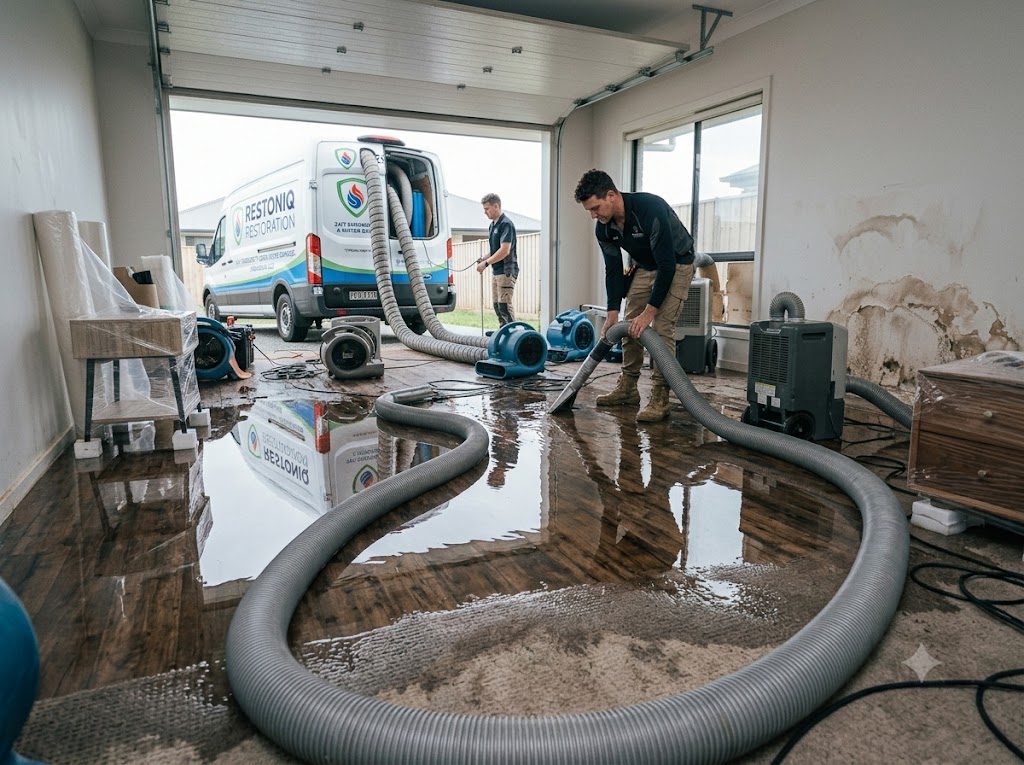
Every hour that water sits on the floor, it wicks further into carpet underlay, skirting boards, plasterboard and subfloor timber. Small amounts can be mopped or soaked up with towels. Larger volumes need professional emergency water extraction with truck-mounted or high-powered portable extractors.
Professional extraction removes far more water than a wet vac. That shortens drying time and reduces the chance of secondary damage like swelling, delamination and mould.
Water damage happening right now? Restoniq’s 24/7 emergency team covers Brisbane, Logan, Ipswich, Moreton Bay, Redlands and the Gold Coast. Call 042 022 3980 or request an urgent callback.
Step 6: Protect Furniture and Belongings
Lift timber furniture onto foil squares, plastic blocks or upturned containers to stop it wicking water and staining carpet. Move rugs, books, electronics, documents and anything valuable to a dry room.
Open drawers and cupboard doors so air can circulate. Remove wet items from built-in wardrobes before the moisture transfers into the cabinetry.
Step 7: Call Your Plumber and Your Insurer
A licensed plumber needs to repair the burst pipe before water can be safely turned back on. In Queensland, plumbing work must be carried out by a licensed plumber; you can check a licence on the QBCC website.
Next, lodge your claim with your home or contents insurer as early as possible. Ask whether they have a preferred restorer, but remember you can request urgent mitigation work to stop the damage getting worse. Our guide to water damage insurance claims in Queensland explains what to expect.
Step 8: Start Professional Drying Within 24 to 48 Hours
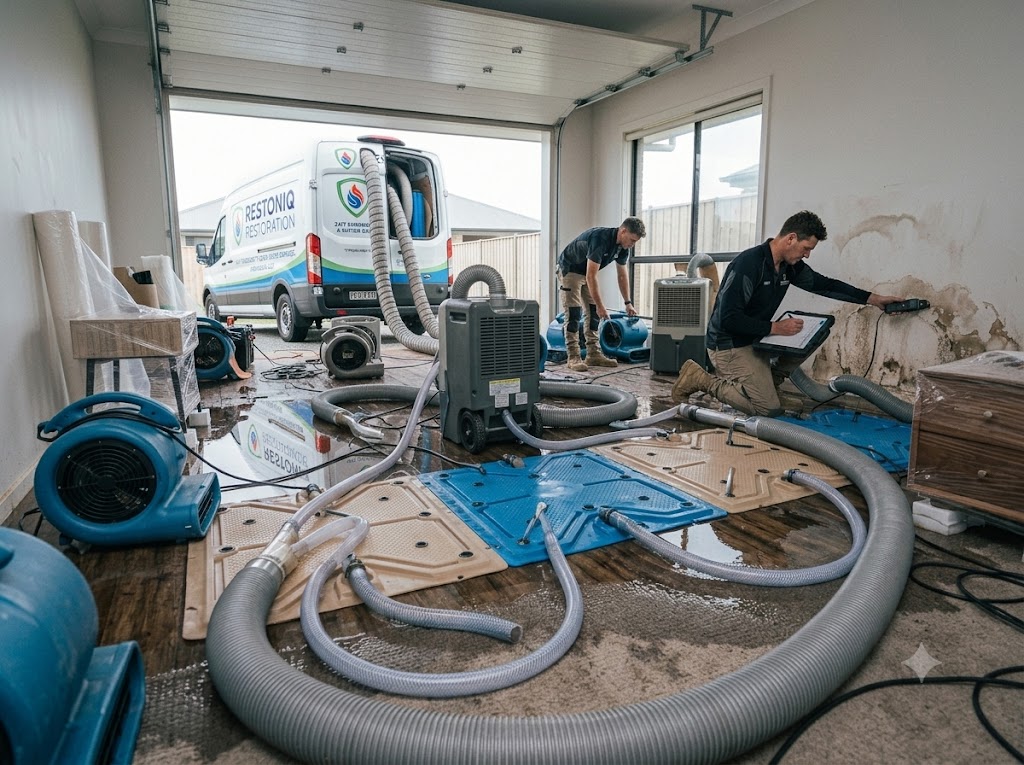
Water you can see is only part of the problem. After a burst pipe, moisture hides inside wall cavities, under floating floors, behind kitchen kickboards and in subfloor framing. If it is not dried properly, it causes swelling, odours and mould growth within days.
A restoration technician uses moisture meters and thermal imaging to map the wet areas, then sets up commercial air movers and dehumidifiers. This process is known as structural drying, and it is monitored daily until materials return to normal moisture levels.
If carpet is affected, wet carpet drying can often save it when the water is clean and drying starts quickly.
Step 9: Watch for Mould and Hidden Damage
Mould can begin to grow on wet building materials within 24 to 48 hours in Brisbane’s warm, humid climate. Watch for musty smells, black or green spotting on walls and skirting, peeling paint or bubbling plaster in the weeks after a burst pipe.
If you notice any of these, book an inspection for mould and bacteria control. Early treatment is far cheaper than removing mould-affected plasterboard later.

What Does Burst Pipe Restoration Cost?
The cost depends on how much water escaped, how long it sat, the materials affected and whether the water was clean. A small leak caught early might only need extraction and two to three days of drying. A burst pipe that ran overnight through several rooms may require removal of underlay, kick boards and lower plasterboard.
Most home insurance policies cover sudden and accidental escape of water, though not the repair of the pipe itself or damage from a slow leak that went unnoticed. Read more in our guide to the cost of water damage restoration.
How to Prevent Another Burst Pipe
- Replace flexi hoses every five to ten years, or sooner if they show rust or bulging
- Ask a plumber to check your water pressure and fit a pressure-limiting valve if needed
- Know where your main stopcock is and make sure it turns freely
- Have older galvanised or copper pipework inspected before renovating
- Fit a water leak detector under sinks and behind the washing machine
For more prevention ideas, read our list of the top causes of water damage in homes.
Frequently Asked Questions
What should I do first when a pipe bursts?
Turn off the main water supply at the stopcock, usually at the front boundary near the water meter. Then switch off power to any wet areas and call a plumber and a water damage restoration company.
Does home insurance cover a burst pipe?
Most Australian home and contents policies cover sudden and accidental escape of liquid, including the resulting damage to floors, walls and belongings. They usually do not cover repairing the pipe itself or damage from a slow leak. Always check your PDS.
How long does it take to dry a house after a burst pipe?
Most clean water jobs dry in three to five days with commercial dehumidifiers and air movers. Larger losses, subfloors and timber floors can take longer and are monitored with moisture meters daily.
Can I stay in my home during drying?
In most cases, yes. Drying equipment is noisy and warm but safe. If the water was contaminated or ceilings are sagging, we may advise staying elsewhere until the area is safe.
Get 24/7 Emergency Help From Restoniq
A burst pipe is stressful, but fast action keeps the damage, the cost and the disruption to a minimum. Restoniq provides emergency water extraction, structural drying and mould prevention across Brisbane, Logan, Ipswich, Moreton Bay, Redlands and the Gold Coast. Our technicians arrive with the equipment to start work immediately, document everything for your insurer and keep you updated until your home is dry. Learn more about our water damage restoration Brisbane service.
Need an emergency restoration team? Restoniq’s 24/7 emergency team covers Brisbane, Logan, Ipswich, Moreton Bay, Redlands and the Gold Coast. Call 042 022 3980 or request an urgent callback.