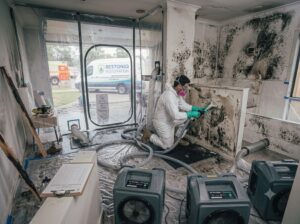
Ceiling water damage is one of the most common calls our Brisbane team receives, especially during summer storm season. A brown stain might look minor, but water sitting above plasterboard adds weight, weakens the board and can bring a ceiling down without warning.
This guide covers the warning signs of ceiling water damage, what usually causes it, when it becomes an emergency and how a professional restorer dries and repairs it.

Table of Contents
8 Warning Signs of Ceiling Water Damage
- Yellow or brown rings that grow after rain or shower use
- Sagging or bulging plasterboard, often in the middle of a sheet
- Bubbling or peeling paint on the ceiling or cornice
- Dripping from light fittings, downlights or exhaust fans
- Cracks along sheet joins or around the cornice
- Musty odours in rooms below the roof or a bathroom
- Dark spotting that may indicate mould growth
- Soft or crumbly plaster when lightly pressed
Common Causes in Brisbane Homes
Most ceiling water damage we see in South East Queensland comes from a short list of sources:
- Storm damage: lifted tiles, cracked ridge capping, blocked valleys and overflowing box gutters. See our storm damage checklist.
- Upstairs bathrooms: failed shower waterproofing, leaking shower bases and cracked grout.
- Burst or leaking pipes running through the roof space or between floors.
- Hot water systems located in the roof that leak or fail. Read about a hot water system leaking.
- Air conditioning condensate lines that block or disconnect.
- Units and apartments where water comes from the unit above.
When Ceiling Water Damage Becomes an Emergency
Treat ceiling water damage as an emergency if the ceiling is sagging, water is coming through light fittings, or you can hear dripping inside the cavity. A single square metre of wet plasterboard holding pooled water can weigh far more than its fixings were designed for.
Clear the room, keep children and pets out, and turn off power to that circuit at the switchboard. Place a bucket under the lowest point of a bulge. Do not poke the ceiling from directly underneath. If water keeps flowing, a professional can safely release it in a controlled way.
How Professionals Assess Ceiling Water Damage
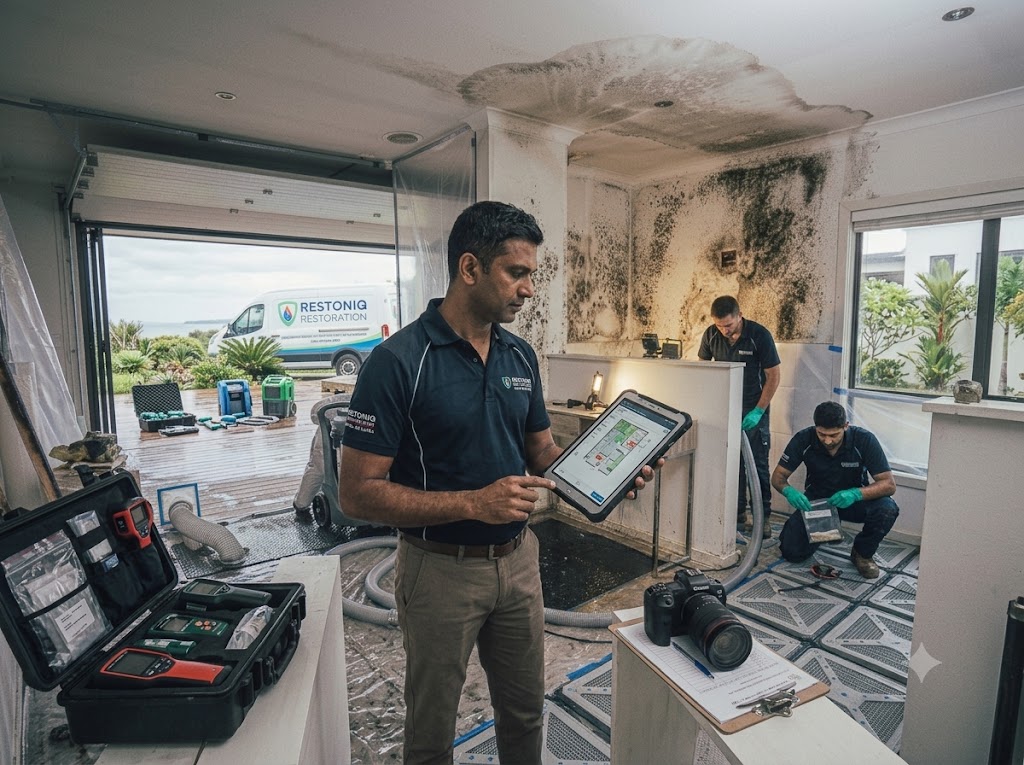
A restorer starts by finding where the water came from and how far it travelled. Thermal imaging cameras show cool, wet areas across the ceiling without cutting holes. Moisture meters then confirm readings in the plasterboard, cornice, timber battens and insulation.
This information shapes the scope: which sheets can be dried in place, which insulation must be removed, and whether mould treatment is needed. Our water damage assessment report also supports your insurance claim.
Water damage happening right now? Restoniq’s 24/7 emergency team covers Brisbane, Logan, Ipswich, Moreton Bay, Redlands and the Gold Coast. Call 042 022 3980 or request an urgent callback.
Drying Ceilings Without Unnecessary Demolition
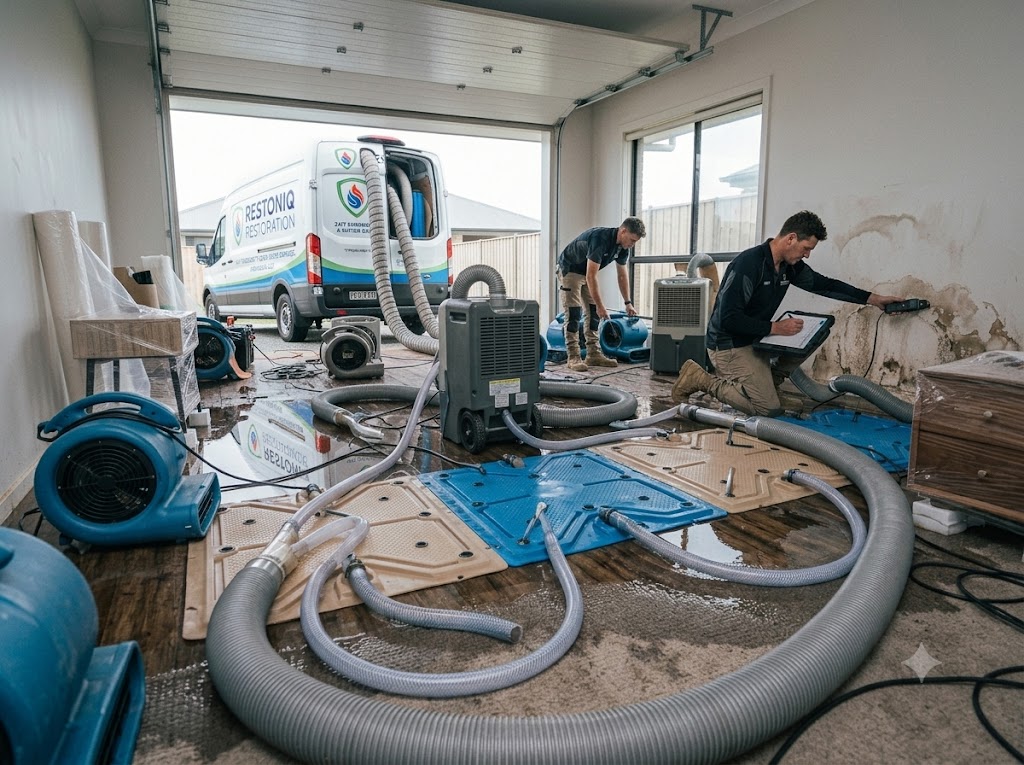
When ceiling water damage is caught early and the water was clean, plasterboard can often be dried in place. Technicians may drill small vent holes to push dry air into the cavity, set up dehumidifiers in the room and roof space, and monitor readings daily.
Wet insulation batts usually need to be removed because they hold moisture against the plasterboard for weeks. This is part of the wider structural drying process.
When Ceiling Sheets Need Replacing
Replacement is usually needed when:
- The plasterboard has sagged and will not return to shape
- The paper face has delaminated or the core has softened
- Mould has grown on the back of the sheet
- The water was contaminated, such as from a sewer or floodwater
Once the framing is confirmed dry, a builder or plasterer installs new sheets, sets the joins and repaints. Replacing before the frame is dry traps moisture and causes repeat problems.
Mould Risk After Ceiling Leaks
Roof spaces in Brisbane get hot and humid, which is ideal for mould. Ceiling water damage that is left for more than a couple of days often leads to mould on the back of the plasterboard and on timber battens. Signs include black spotting at the edge of a stain and a stale smell when the air conditioning starts.
If you suspect mould, book our mould and bacteria control team before repainting. Painting over mould hides it but does not stop it.
Does Insurance Cover Ceiling Water Damage?
Storm damage and sudden escape of water are generally covered by home insurance. Damage from gradual leaks, poor maintenance or failed waterproofing that has been leaking for months is often excluded. Photograph the damage, keep any failed parts and contact your insurer early. Our guide to water damage insurance claims explains the process, and the Insurance Council of Australia has consumer guidance too.
Frequently Asked Questions
Can a water-damaged ceiling collapse?
Yes. Plasterboard loses strength when wet and pooled water adds weight. A sagging ceiling should be treated as an emergency and the room kept clear.
How long does ceiling water damage take to dry?
A lightly affected ceiling can dry in two to four days with dehumidifiers and air movers. Saturated ceilings with wet insulation often take longer or need sheets replaced.
Can I just paint over a ceiling water stain?
Only once the leak is fixed and the plasterboard is confirmed dry and mould-free. Use a stain-blocking primer first, otherwise the stain will bleed through.
Who fixes ceiling water damage in a unit?
In a strata building, the body corporate is often responsible for common property such as the roof and pipes between units. Read our guide to body corporate water damage in Queensland.

Get 24/7 Emergency Help From Restoniq
Ceiling water damage is easy to underestimate. Restoniq traces the source, dries the ceiling cavity properly and documents everything for your insurer, so repairs only happen once the structure is truly dry. We respond 24/7 across Brisbane and the Gold Coast. Learn more about our water damage restoration Brisbane service, or read our body corporate water damage guide if you live in a unit.
Need an emergency restoration team? Restoniq’s 24/7 emergency team covers Brisbane, Logan, Ipswich, Moreton Bay, Redlands and the Gold Coast. Call 042 022 3980 or request an urgent callback.