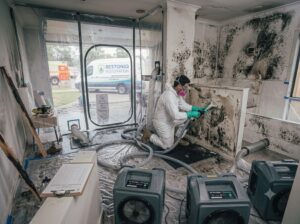
Mould in walls is common in Brisbane homes after leaks, storms and humid summers. Because it grows inside the cavity and on the back of plasterboard, it often goes unnoticed until it causes stains, smells or health symptoms.
Here are seven signs of mould in walls, the health risks and what to do about it.

Table of Contents
7 Signs of Mould in Walls
- A persistent musty or earthy smell
- Dark spots or staining, often near the floor or ceiling
- Bubbling, cracking or peeling paint
- Warped or soft skirting boards
- Damp patches after rain or shower use
- Allergy symptoms that improve when you leave the house
- A history of leaks or flooding in that area
What Causes Mould in Walls?
Mould needs moisture. Common sources include leaking showers and pipes inside walls, roof leaks, rising damp, condensation and past floods that were not dried properly. Read about water damage behind walls and mould after flood.
Mould in walls is especially common in bathrooms, laundries and external walls that face away from the sun. If a wall has been wet for more than two days, have it checked.
Health Risks
Mould can trigger allergies, asthma, sinus problems and skin irritation. Young children, older people and anyone with a weakened immune system are more vulnerable. Visit healthdirect for general health information, and see a GP about symptoms.
Water damage happening right now? Restoniq’s 24/7 emergency team covers Brisbane, Logan, Ipswich, Moreton Bay, Redlands and the Gold Coast. Call 042 022 3980 or request an urgent callback.
How Professionals Find Hidden Mould
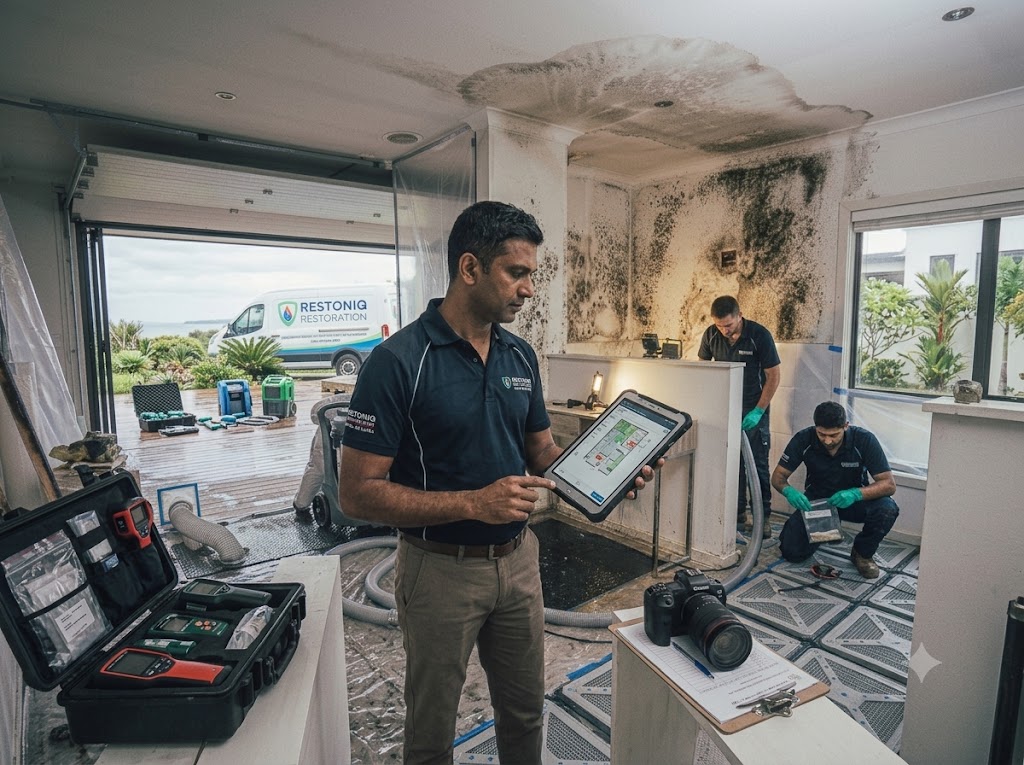
Technicians use moisture meters, thermal imaging and visual inspection through small access points to confirm moisture and mould without unnecessary demolition. See moisture mapping and thermal imaging.
Testing is most useful when the moisture source is unclear or when occupants have health concerns. A written report also helps landlords, tenants and insurers agree on the scope.
How Mould in Walls Is Removed
- Fix the moisture source
- Contain the area and run HEPA air scrubbers
- Remove mould-affected plasterboard and insulation
- HEPA vacuum and treat framing with antimicrobial products
- Dry the cavity and verify moisture levels
- Rebuild and repaint
Learn about our mould and bacteria control service and typical mould removal cost.
What Not to Do
- Do not paint over mould
- Do not use bleach on plasterboard; it does not kill roots in porous materials
- Do not cut into mouldy walls without protection and containment
Treating the problem properly the first time is cheaper than repeated surface cleaning that never reaches the source.

Frequently Asked Questions
How do I know if there is mould in walls?
Musty smells, stains, bubbling paint, warped skirting and high moisture readings are common signs.
Is mould in walls dangerous?
It can trigger allergies and asthma and indicates ongoing moisture that damages the structure.
Can wall mould be removed without replacing plasterboard?
Surface mould on sealed surfaces can be cleaned, but mould on the paper face or back of plasterboard usually means replacement.
Will insurance cover wall mould?
Mould from a sudden insured water event may be covered. Mould from long-term leaks is usually excluded.
Get 24/7 Emergency Help From Restoniq
If you suspect mould in walls, Restoniq can inspect, test moisture levels and remediate safely across Brisbane and the Gold Coast. Learn about our water damage restoration Brisbane service.
Need an emergency restoration team? Restoniq’s 24/7 emergency team covers Brisbane, Logan, Ipswich, Moreton Bay, Redlands and the Gold Coast. Call 042 022 3980 or request an urgent callback.