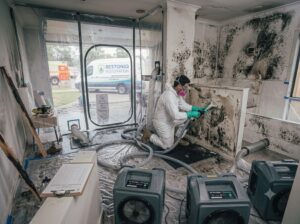
Many Brisbane homes are built off the ground, from classic timber Queenslanders on stumps to lowset homes with a crawl space. That design helps airflow, but it also means water can collect underneath without anyone noticing. Subfloor water damage is easy to ignore until floors bounce, smells rise through floorboards or termites move in.
Here are the warning signs of subfloor water damage and how it is properly fixed.
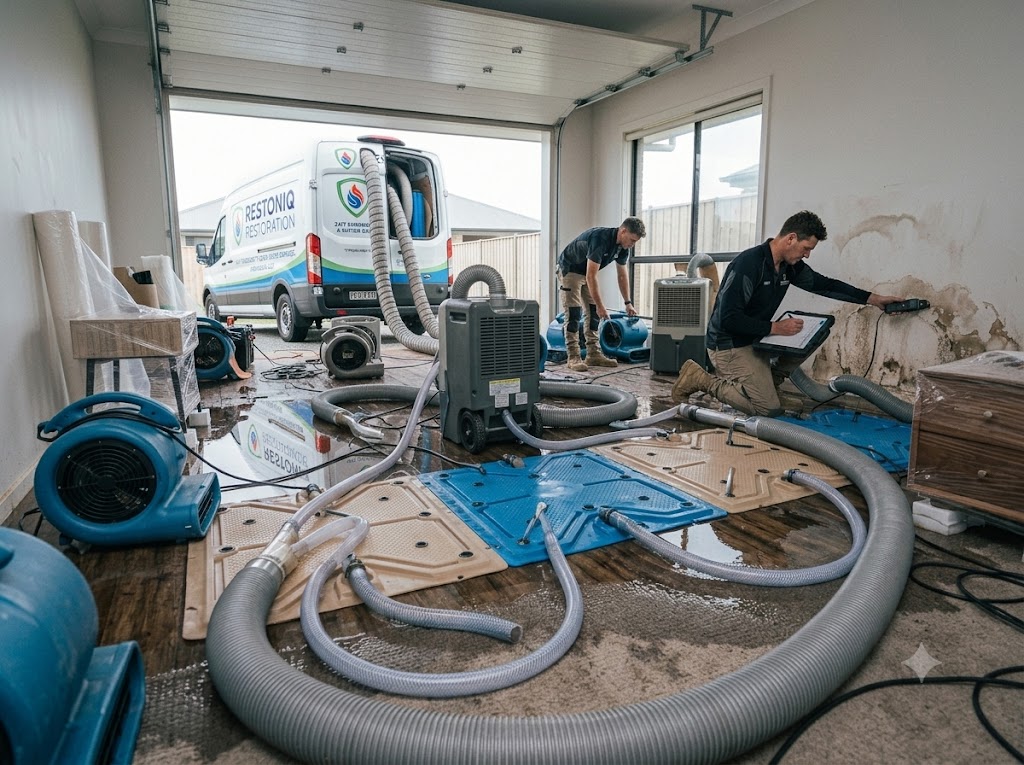
Table of Contents
7 Warning Signs of Subfloor Water Damage
- Musty or earthy smells inside, especially when the house is closed up
- Cupping, gapping or squeaking floorboards
- Soft or bouncy spots underfoot
- White or green fuzz on bearers and joists
- Damp soil, puddles or tide marks under the house after rain
- Rust on stirrups, stumps or nails
- Termite mud leads on stumps or walls
Common Causes
- Stormwater running under the house because of poor site drainage
- Overflowing gutters and disconnected downpipes
- Leaking pipes, toilets and showers above the subfloor
- Under house flooding during heavy rain or river floods
- Blocked or inadequate subfloor ventilation
Why Subfloor Water Damage Matters
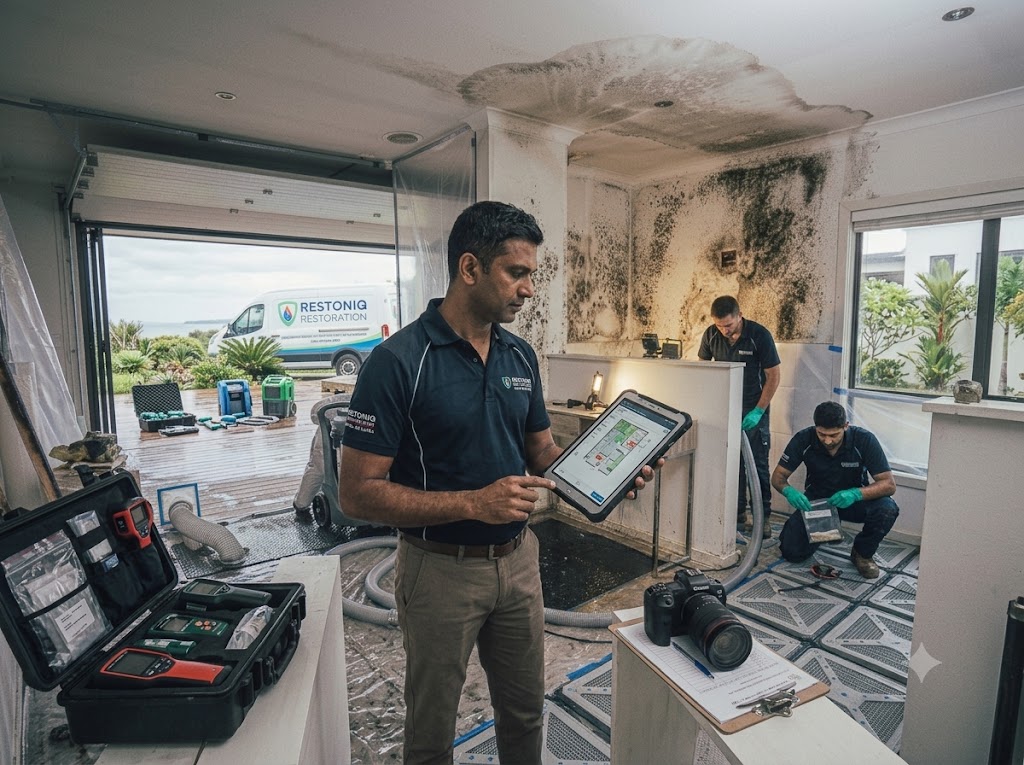
Constant moisture softens timber, encourages wood decay fungi and attracts termites, which are a major risk in South East Queensland. Moisture also rises through floors and walls, raising indoor humidity and causing mould inside the house. Read about mould after water damage.
Water damage happening right now? Restoniq’s 24/7 emergency team covers Brisbane, Logan, Ipswich, Moreton Bay, Redlands and the Gold Coast. Call 042 022 3980 or request an urgent callback.
How Professionals Dry a Subfloor
- Inspection and moisture mapping of bearers, joists, flooring and soil. See moisture mapping and thermal imaging.
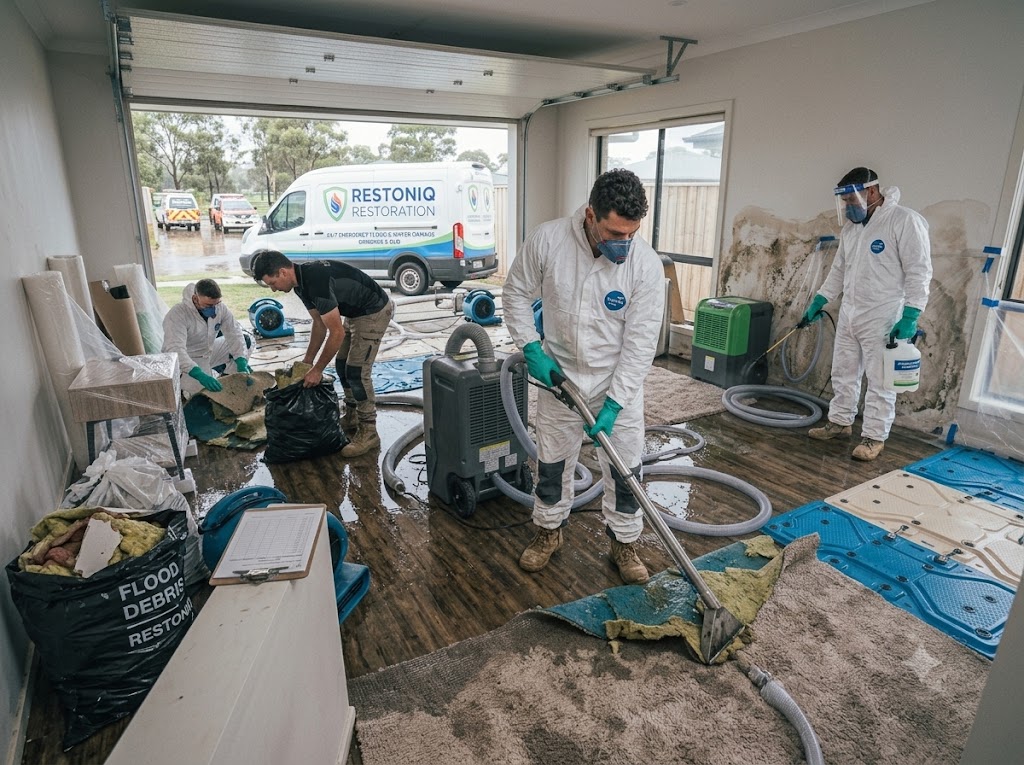
- Water removal from pooling areas with pumps and water extraction equipment.
- Removal of contaminated debris after floodwater, with antimicrobial treatment.
- Targeted drying with air movers and dehumidifiers, sometimes with temporary containment to speed results. Learn about structural drying.
- Verification that timber has returned to normal moisture levels.
Under House Flooding After Heavy Rain
If your home is in a flood-prone area, under house flooding can leave silt and contaminated water around stumps, storage and services. Do not go under the house while water is present if electrical services are nearby. After water recedes, remove stored items, clean silt and dry the area. Brisbane residents can check flood risk with the Brisbane City Council flood tools. Our flood clean-up team can help.
Preventing Subfloor Water Damage
- Keep gutters clear and downpipes connected to stormwater
- Make sure ground slopes away from the house
- Keep subfloor vents clear of garden beds and stored items
- Fix plumbing leaks promptly
- Book regular termite inspections
See our Brisbane wet season checklist for more.
Frequently Asked Questions
Is water under my house normal after rain?
Some damp soil can be normal, but pooling water that remains for days usually means drainage problems that should be fixed.
Can subfloor water damage cause mould inside?
Yes. Moisture rises through floors and walls and raises indoor humidity, which encourages mould.
How long does subfloor drying take?
Most subfloors dry in four to ten days depending on timber saturation, soil moisture and airflow.
Does insurance cover under house flooding?
It depends on your policy. Flood cover is optional in many policies, while drainage and maintenance issues are usually excluded.
Get 24/7 Emergency Help From Restoniq
Restoniq dries and treats subfloor water damage in Queenslanders, lowset homes and commercial buildings across Brisbane and the Gold Coast. Contact our 24/7 team, or learn more about our water damage restoration Brisbane service.
Need an emergency restoration team? Restoniq’s 24/7 emergency team covers Brisbane, Logan, Ipswich, Moreton Bay, Redlands and the Gold Coast. Call 042 022 3980 or request an urgent callback.