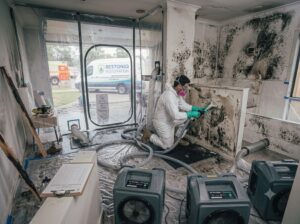
Emergency water damage is a race against time. Whether it comes from a burst flexi hose at 2am, a failed hot water system or a storm pushing rain through the roof, the clock starts the moment water touches your floors. What happens in the next 24 hours decides how much of your home can be saved.
Below, our Brisbane emergency team explains what water does to a home hour by hour, what a professional crew does when it arrives, and the simple steps you can take before help gets there.
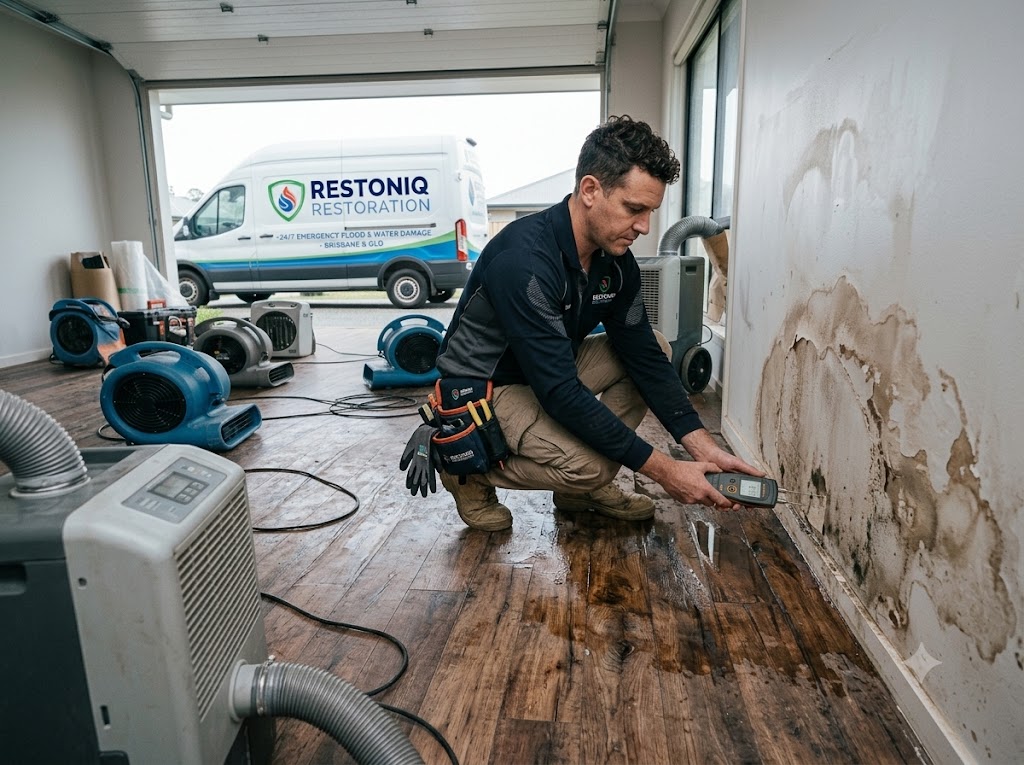
Table of Contents
Hour 0 to 1: Water Spreads Further Than You Think
Water moves sideways and downward. Within minutes it runs under skirting boards, soaks into carpet underlay and follows timber joists into neighbouring rooms. In double-storey homes it travels through ceiling cavities and light fittings to the floor below.
At this stage most of the water is still on the surface, which makes it the cheapest point to deal with. Shutting off the source and calling for help immediately is the single most valuable thing you can do.
Hours 1 to 4: Absorption Begins
Porous materials start to wick moisture upward. Plasterboard can draw water 30 centimetres or more up a wall. Particleboard flooring and kitchen kickboards begin to swell. Carpet underlay acts like a sponge, holding several litres per square metre.
Furniture legs leave rust and tannin stains on carpet, and dyes from rugs can bleed. Paper documents, photos and electronics sitting on the floor are now at real risk.
Hours 4 to 12: Secondary Damage Starts
Indoor humidity climbs as water evaporates into the air. That moisture condenses on cooler surfaces, so damage now spreads to areas that never got wet directly, such as wardrobe contents, curtains and timber furniture.
Laminate and engineered timber floors may start to cup or lift. Paint can blister. If the water came from a toilet, drain or floodwater, bacteria multiply quickly in the warm conditions typical of a Brisbane home.
Hours 12 to 24: Odours and Microbial Growth
A musty odour is often the first sign that microbial activity has started. Mould spores are always present in the air, and they only need moisture, warmth and an organic food source such as timber, paper-faced plasterboard or dust to grow.
In South East Queensland’s humid climate, visible mould can appear on wet materials within 24 to 48 hours. That is why emergency water damage response focuses on getting drying equipment running on day one. Read more about mould after a flood or leak.
Water damage happening right now? Restoniq’s 24/7 emergency team covers Brisbane, Logan, Ipswich, Moreton Bay, Redlands and the Gold Coast. Call 042 022 3980 or request an urgent callback.
What Our Emergency Team Does on Arrival
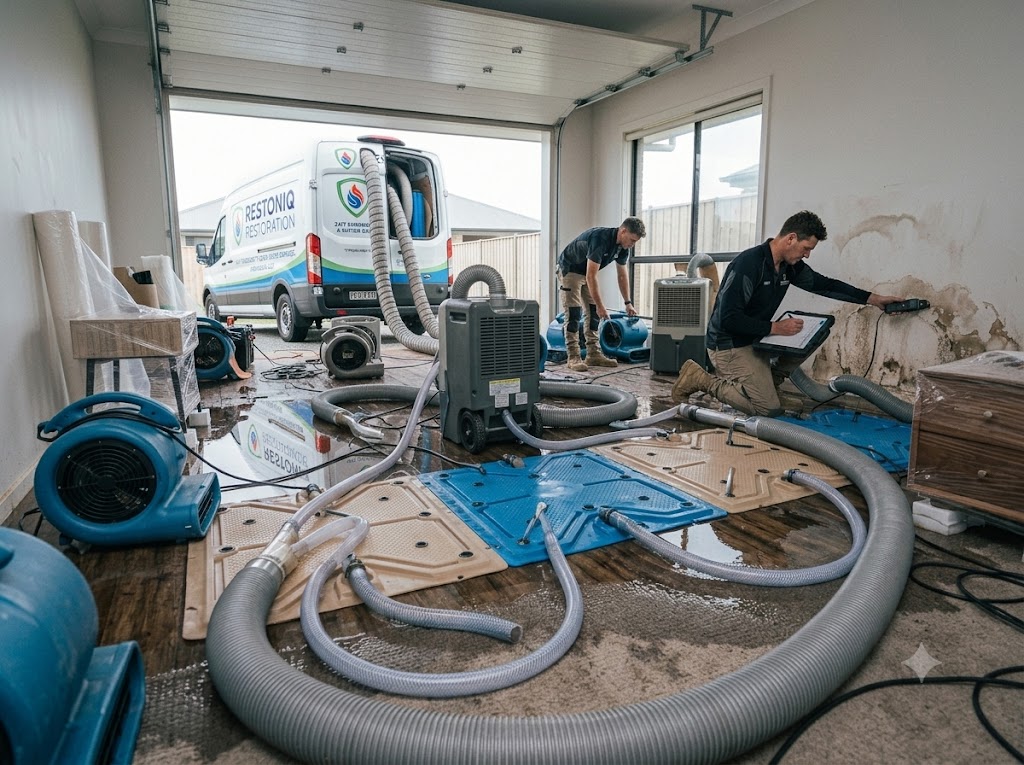
When Restoniq attends an emergency water damage call, the process follows the IICRC S500 standard for professional water damage restoration:
- Safety check: electrical hazards, ceiling sag and slip risks are assessed first.
- Source and category: we confirm the water source is stopped and classify how contaminated the water is.
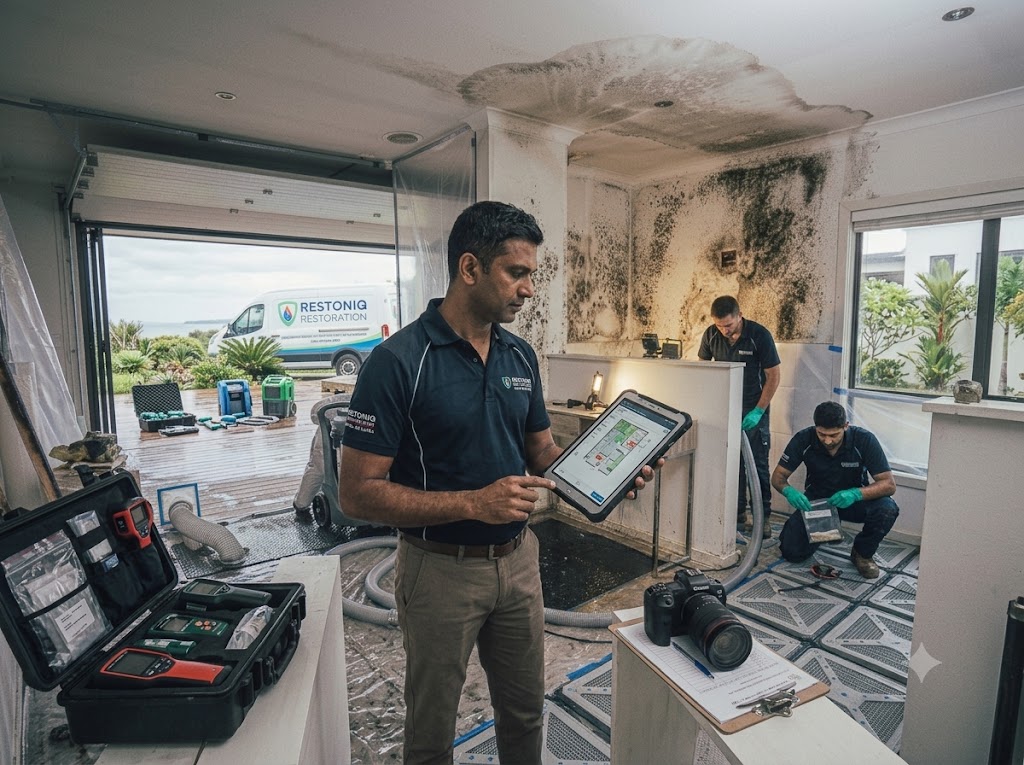
- Moisture mapping: meters and thermal imaging show where water has travelled, including behind walls. See our water damage assessment service.
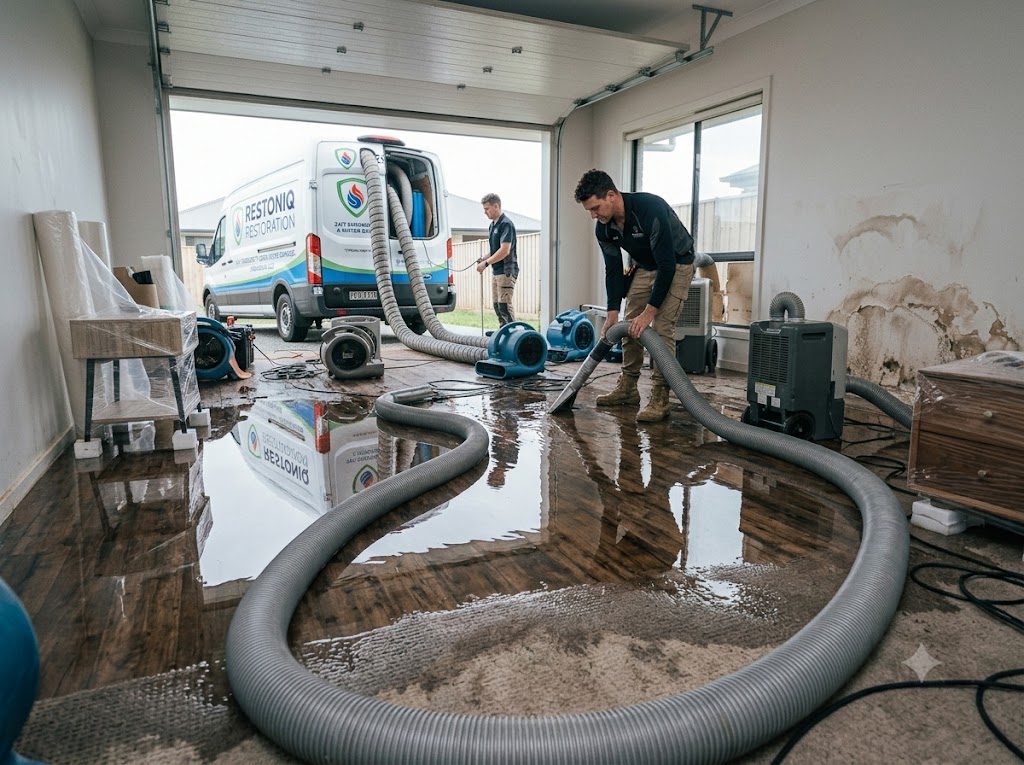
- Extraction: high-powered water extraction removes standing and absorbed water from carpets and hard floors.
- Drying setup: air movers and dehumidifiers are positioned for structural drying.
- Documentation: photos, readings and a scope of works are recorded for your insurer.
Days 2 to 5: Monitoring Until Dry
Drying is not set-and-forget. Technicians return to take moisture readings, move equipment and adjust dehumidifier settings. Most clean water jobs reach dry standard within three to five days. Timber floors, subfloors and large commercial losses can take longer.
Once readings match unaffected areas, equipment is removed and a drying report is issued. That report is valuable if your insurer or builder needs proof the structure was dried properly before repairs begin.
What You Can Do Before Help Arrives
- Turn off the water at the main stopcock
- Switch off power to wet rooms if it is safe to reach the switchboard
- Move electronics, rugs and valuables to a dry area
- Put foil or plastic under furniture legs
- Take photos and video of everything for insurance
- Open windows if the weather is dry, but do not use heaters, which can spread moisture and odours
If you are dealing with a burst pipe, follow our burst pipe emergency steps.
Why Speed Saves Thousands
Restoration costs rise sharply once materials move from wet to saturated. Carpet that could be dried in place on day one may need replacing by day three. Plasterboard that could be dried with air movers may need cutting out once mould starts. Fast response is also what insurers expect: most policies require you to take reasonable steps to prevent further damage.
For a breakdown of typical costs, see the cost of water damage restoration. Industry guidance from the IICRC also stresses starting drying as early as possible.
Frequently Asked Questions
How quickly should emergency water damage be dried?
Drying should start within 24 to 48 hours. In Brisbane’s humid climate, starting on the same day gives the best chance of saving carpet, plasterboard and timber.
Is emergency water damage covered by insurance?
Sudden and accidental escape of water is usually covered by home and contents insurance. Gradual leaks and maintenance issues are often excluded. Check your policy and contact your insurer early.
Do you attend emergency water damage at night?
Yes. Restoniq runs a 24/7 emergency response across Brisbane, Logan, Ipswich, Moreton Bay, Redlands and the Gold Coast, including nights, weekends and public holidays.
Can I dry water damage myself with fans?
Domestic fans move air but do not remove moisture from the room. Without dehumidifiers and moisture readings, materials can look dry on the surface while staying wet inside, which leads to mould.
Get 24/7 Emergency Help From Restoniq
Emergency water damage rarely happens at a convenient time, so our team is ready day and night. Restoniq brings extraction, drying and monitoring equipment on the first visit, works with your insurer and keeps you informed at every step. Find out more about our water damage restoration Brisbane service or see our full list of restoration services.
Need an emergency restoration team? Restoniq’s 24/7 emergency team covers Brisbane, Logan, Ipswich, Moreton Bay, Redlands and the Gold Coast. Call 042 022 3980 or request an urgent callback.