After a fire, smoke and soot often cause more widespread damage than the flames. Fine soot particles travel through ducts, wall cavities and gaps, settling on surfaces in rooms the fire never touched. Acidic residues can etch metals, yellow plastics and discolour paint within days.
This guide explains how smoke damage cleanup works and what you can do safely in the first days after a fire.
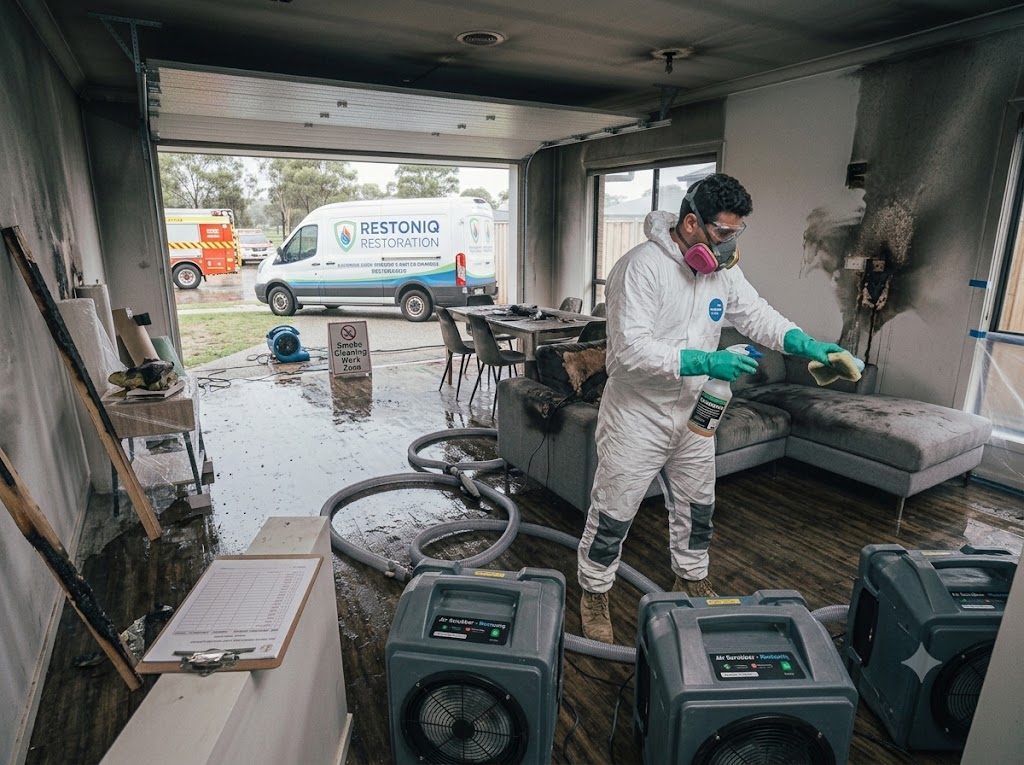
Table of Contents
Step 1: Wait for Clearance
Do not enter the property until Queensland Fire Department or the relevant authority says it is safe. Fire can weaken floors, ceilings and roof structures. For fire safety advice, see the Queensland Fire Department.
Step 2: Contact Your Insurer
Fire and smoke damage are generally covered by home and contents insurance. Notify your insurer early and ask about temporary accommodation. See our insurance claim guide.
Step 3: Do Not Wipe Soot
Wiping or using household cleaners can smear soot deeper into porous surfaces and set stains permanently. Smoke damage cleanup uses dry chemical sponges, HEPA vacuums and specialised cleaners.
Step 4: Identify the Type of Smoke Residue
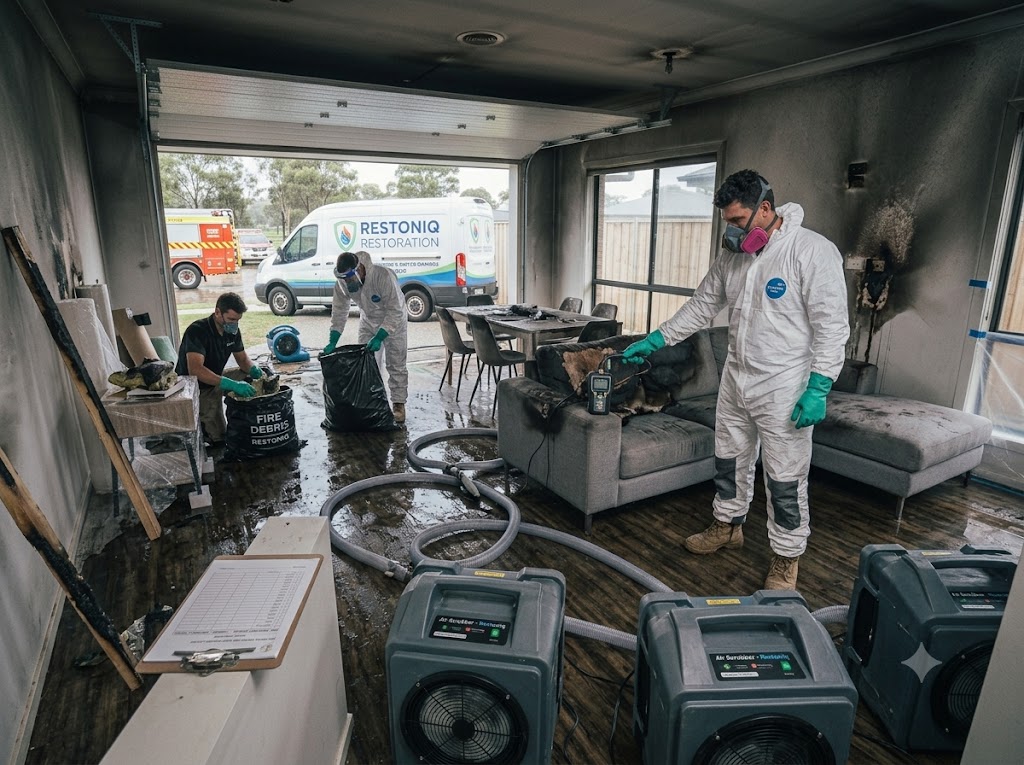
- Dry smoke from fast, hot fires: powdery and easier to clean.
- Wet smoke from smouldering plastics: sticky, smeary and strongly odorous.
- Protein residue from kitchen fires: almost invisible but with a strong smell.
- Fuel or oil soot: dense and difficult.
Water damage happening right now? Restoniq’s 24/7 emergency team covers Brisbane, Logan, Ipswich, Moreton Bay, Redlands and the Gold Coast. Call 042 022 3980 or request an urgent callback.
Step 5: Deal With Firefighting Water
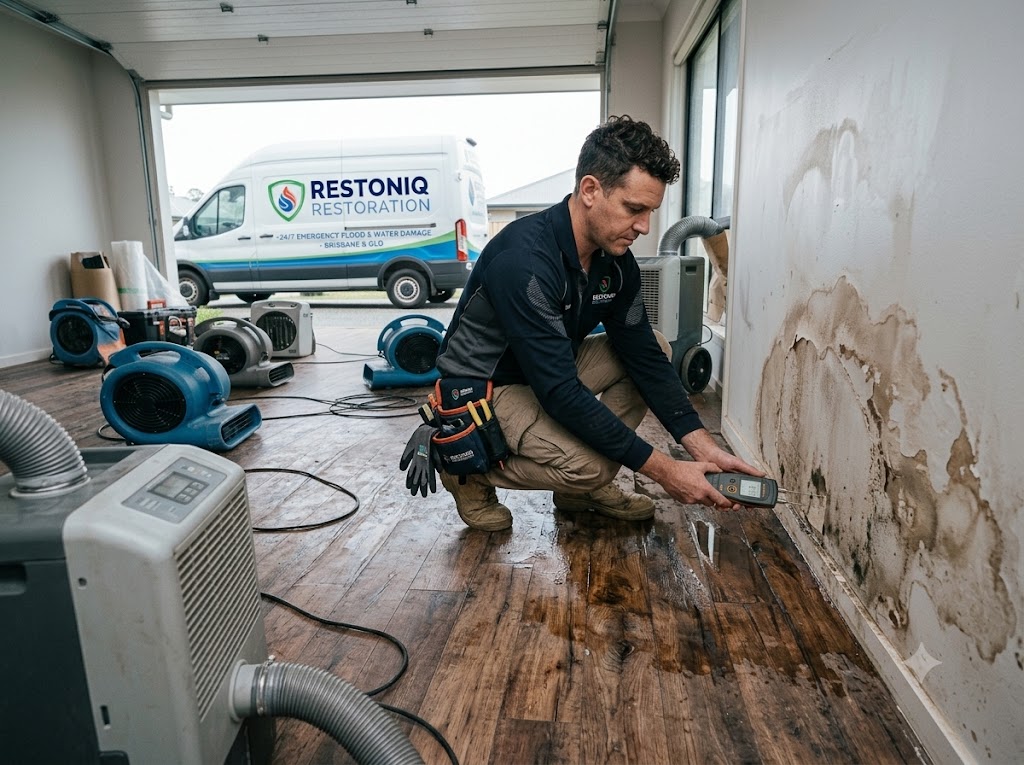
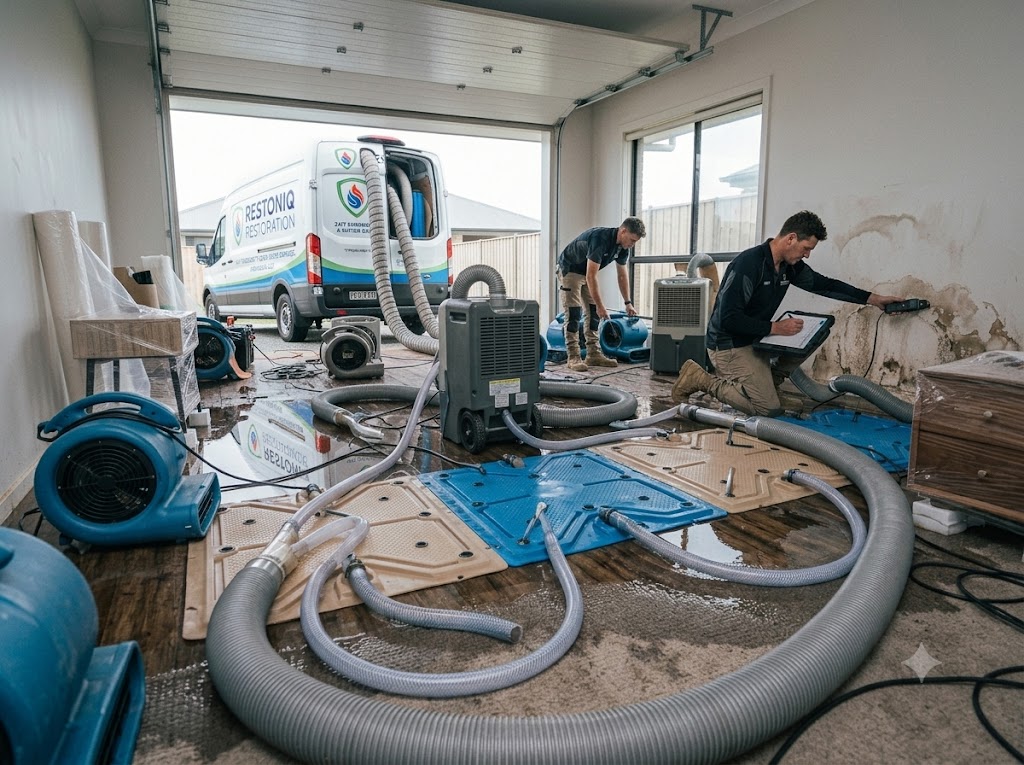
Firefighting water soaks carpets, walls and subfloors. Leaving it causes swelling and mould. Our water extraction and structural drying services start alongside smoke damage cleanup.
Step 6: Clean Contents and Structure
Hard surfaces, cabinetry, ceilings and walls are cleaned with methods suited to the residue type. Contents may be cleaned on site or packed out. Items with heavy heat damage or contamination may be unsalvageable.
Step 7: Remove Odours at the Source
Smoke odour lingers in insulation, soft furnishings and ducts. Professional deodorisation uses thermal fogging, hydroxyl generators or ozone treatment in unoccupied areas, after cleaning has removed residues.
Step 8: Restore and Rebuild
Once cleaning and odour removal are complete, damaged building materials can be replaced and repainted. Sealing smoke-affected surfaces with a stain-blocking primer stops stains bleeding through new paint.
Learn more about our full fire restoration service, or read 5 critical steps to recover after fire damage.
Frequently Asked Questions
How long does smoke damage cleanup take?
Small kitchen fires may take one to three days. Larger fires with widespread soot and water damage can take several weeks including rebuild.
Can smoke-damaged clothes be saved?
Many can be professionally cleaned and deodorised. Items with heavy soot or heat damage may not be salvageable.
Is it safe to stay in a smoke-damaged house?
Soot can irritate lungs, especially for children and people with asthma. It is usually best to stay elsewhere until smoke damage cleanup is complete.
Does insurance cover smoke damage?
Smoke damage from a fire is generally covered. Check your policy for limits and conditions.
Get 24/7 Emergency Help From Restoniq
Restoniq provides fire, smoke and water damage restoration across Brisbane and the Gold Coast. Our team handles soot removal, odour control and drying in one coordinated process. Learn more about our fire damage restoration Brisbane service or our water damage restoration team.
Need an emergency restoration team? Restoniq’s 24/7 emergency team covers Brisbane, Logan, Ipswich, Moreton Bay, Redlands and the Gold Coast. Call 042 022 3980 or request an urgent callback.